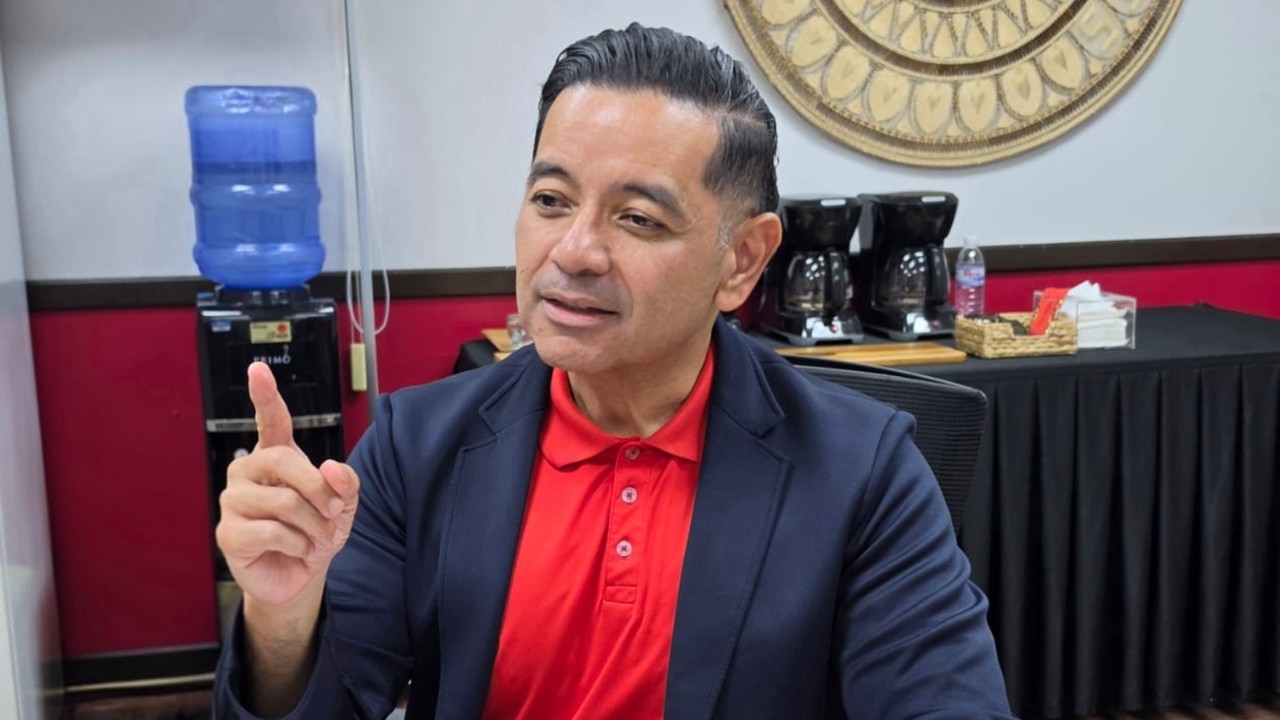
Torres issues a statement regarding the CNMI audits
A STATEMENT REGARDING THE CNMI AUDITS
Understanding the Numbers, the Challenges, and the Work Ahead
In light of recent public discussion and differing interpretations of the CNMI audits, I believe it is important to provide the facts, explain what the numbers mean, and acknowledge the challenges the Commonwealth faced during this period.
One of the claims being circulated is that I left the CNMI with $1.2 billion in debt. I understand why that number gets people's attention. If I heard that a governor left the Commonwealth with $1.2 billion in debt, I would have questions too.
The audited financial statements, however, use a different term: liabilities. Liabilities and debt are related, but they are not the same thing.
The Commonwealth faced serious financial-management and accounting challenges during my years in executive leadership, including as Lieutenant Governor and Governor, and I recognize that there was room for improvement.
The CNMI confronted Super Typhoon Soudelor, Typhoon Mangkhut, Super Typhoon Yutu, the COVID-19 pandemic, unprecedented federal disaster and pandemic funding, severe economic disruption, Department of Finance staffing shortages, an audit backlog, a change in independent auditors, and a difficult conversion from a decades-old financial system to Tyler Munis. Those circumstances do not remove the government's responsibility to maintain strong records and controls, but they are important context for understanding the audit results.
UNDERSTANDING THE $1.254 BILLION LIABILITY FIGURE
A government's liabilities include money it has borrowed, but they also include many other obligations: tax refunds owed to residents, unpaid bills, employee leave, pension obligations, court and settlement obligations, amounts due to other government entities, federal grant accounting obligations, and other commitments.
Some of those obligations existed before I became Governor. The financial statements, for example, include obligations connected to the NMI Settlement Fund and long-standing commitments that predate my administration.
The approximately $1.254 billion figure being cited was not identified in the FY 2022 financial statements as borrowed debt. The statement reported approximately $1.239 billion in liabilities plus $15.1 million in deferred inflows of resources. The same financial report separately and specifically identified approximately $75.6 million in long-term debt outstanding as of September 30, 2022.
The $1.254 billion included approximately:
• $360.9 million in net pension liability
• $326.8 million due to federal grantor agencies
• $200.9 million in other liabilities and accruals
• $107.8 million in accounts payable
• $58.4 million in tax rebates payable
• $43.2 million due to component units
• $25.3 million due to the NMI Settlement Fund, plus other obligations
These are real obligations that must be managed responsibly. They are not, however, all money the Commonwealth borrowed from a bank or bondholder.
WHY FEDERAL GRANT FUNDS CAN APPEAR AS A LIABILITY
The federal grant portion is especially important because it is easy to misunderstand. When the federal government sends the CNMI money, the Commonwealth cannot simply treat every dollar as unrestricted revenue because the cash arrived. Federal funds come with specific purposes, eligibility rules, documentation requirements, and expenditure conditions.
Until those requirements are satisfied and the revenue is properly recognized, the government can carry a corresponding accounting obligation. In other words, federal grant cash or resources can remain subject to federal restrictions while the financial statements also show an amount 'due to grantor agencies.' That does not mean the Commonwealth borrowed that money, owes a bank, or that local taxpayers must repay it with interest.
Approximately $209.9 million of the amount listed as 'due to grantor agencies' at the end of FY 2022 was associated with ARPA. That distinction is important when evaluating the broader $1.254 billion liability figure.
A federal grant accounting liability is not the same as a bank loan. An unpaid tax rebate is not bonded debt. Accounts payable are not bonds. A pension liability is different from money borrowed through a bond issuance. Deferred inflows are a separate accounting category. Each measure describes a different part of the Commonwealth's financial position.
THE ACTUAL LONG-TERM BONDED DEBT WAS ABOUT $75.6 MILLION - MOST OF IT PRE-DATED MY ADMINISTRATION
So let us look at the number that actually represents the Commonwealth's long-term bonded debt. At September 30, 2022, approximately $75.517 million in bond principal remained outstanding. With approximately $69,500 in unamortized premiums, the reported bonds-payable balance was approximately $75.587 million.
• 2007 Series A General Obligation Refunding Bonds: $23.390 million - issued before the Torres administration
• 2007 Series B General Obligation Refunding Bonds: $29.605 million - issued before the Torres administration
• 2020 Series A Interim Pension Obligation Bond: $22.522 million - issued during the Torres administration
Approximately $53.0 million - about 70 percent - of the outstanding bond principal came from bonds issued in 2007, roughly eight years before I became Governor. Those 2007 bonds were themselves primarily refunding bonds used to refinance older CNMI debt from 2000 and 2003.
The only bond remaining in the FY 2022 balance that was issued during my administration was the 2020 Pension Obligation Bond. It was originally approximately $24.35 million and was used to address an already-existing unfunded retirement obligation. By September 30, 2022, approximately $22.52 million remained outstanding.
For additional perspective, before I became Governor, approximately $84.67 million in principal on the 2007 bonds remained outstanding at September 30, 2015. By September 30, 2022, those inherited bonds had been reduced to approximately $52.995 million. Even after adding the 2020 pension obligation financing, total outstanding bond principal in FY 2022 was below the amount of 2007 bond principal that existed before my administration.
Taken together, the audited numbers provide a more complete picture: approximately $75.6 million in long-term bonded debt, roughly $53.0 million of which was associated with 2007 bonds that pre-dated my administration, and approximately $22.5 million remaining on the pension obligation bond issued during my administration.
THE $580 MILLION DEFICIT NET POSITION REQUIRES IMPORTANT GASB PENSION ACCOUNTING CONTEXT
Another large number being cited from the audits is the approximately $580 million deficit net position reported at the end of FY 2022. I understand why that number sounds alarming, and the Commonwealth did have serious accumulated financial obligations. But the $580 million figure was not a $580 million operating loss in FY 2022, $580 million in new borrowing, or $580 million in cash that disappeared during my administration.
A major part of the history behind that number comes from the Commonwealth's implementation in FY 2019 of Governmental Accounting Standards Board Statement No. 68, Accounting and Financial Reporting for Pensions, and GASB Statement No. 71, Pension Transition for Contributions Made Subsequent to the Measurement Date. The FY 2019 audit states that these pension-accounting standards had not been adopted in previous CNMI fiscal years. Their implementation required the Commonwealth to recognize its net pension liability and related pension accounting items in the government-wide financial statements.
This is a critical distinction for understanding the numbers. The underlying retirement obligation did not suddenly come into existence in FY 2019 because hundreds of millions of dollars were newly spent or borrowed. What changed was how the longstanding pension obligation was recognized and displayed in the Commonwealth's government wide financial statements.
The impact was substantial. Before implementation of GASB 68, the Commonwealth had previously reported governmental-activities deficit net position of approximately $51.5 million for FY 2018. When the CNMI implemented GASB 68, the FY 2018 government-wide net position was restated downward by approximately $404.4 million, from about negative $51.5 million to about negative $455.8 million. The FY 2019 audit specifically identifies that $404.4 million restatement as resulting from implementation of GASB 68.
That $404.4 million restatement did not represent $404.4 million in new expenditures, new bonds, or missing cash. It reflected the accounting recognition of a pension obligation that already existed, together with the related pension accounting adjustments required in the government-wide statements. The FY 2019 audit further explains that this implementation did not change the governmental fund financial statements, which continued to report pension expenditures on their applicable fund-accounting basis.
By September 30, 2022, the Commonwealth reported approximately $360.9 million in net pension liability. That pension liability was therefore one of the largest components contributing to the negative government-wide net position. It should be taken seriously, but it should not be described as though one administration borrowed or spent $360.9 million to create it.
The FY 2022 audit also shows that the Commonwealth did not create a new $580 million deficit during that fiscal year. The government entered FY 2022 with approximately $580.1 million in negative net position and ended the year at approximately $580.0 million. Total FY 2022 revenues of approximately $732.1 million slightly exceeded total governmental-activity expenses of approximately $732.0 million, resulting in an approximately $81,000 improvement in net position during my final complete fiscal year as Governor.
None of this means the Commonwealth's accumulated financial condition was where it needed to be. The pension liability, General Fund deficit, payables and other obligations were real and required continued attention. But it is equally important to explain the accounting history accurately. A substantial portion of the large government-wide deficit figure resulted from recognizing longstanding pension obligations under GASB reporting requirements, not from hundreds of millions of dollars in new debt or spending created in FY 2022.
THE GENERAL FUND DEFICIT AND DISASTER REIMBURSEMENTS ALSO REQUIRE CONTEXT
The FY 2022 financial statements also reported an unassigned General Fund deficit of approximately $271.1 million as of September 30, 2022. That was a serious accumulated financial condition and should not be minimized.
At the same time, an unassigned fund-balance deficit is not the same thing as $271.1 million in newly borrowed debt or $271.1 million in cash that disappeared during one fiscal year. It reflects the accumulated financial position of the General Fund, including assets, liabilities, revenues, expenditures and prior-period activity.
It is also important to understand the effect that disaster-response spending and the timing of federal reimbursements had on the Commonwealth's finances during this period. In FY 2022 alone, General Fund expenditures exceeded the final budget by approximately $55.8 million, and the audited financial statements specifically report that approximately $34.7 million - about 62 percent of that variance - was attributable to disaster-related expenditures.
During this same period, the Commonwealth continued to administer FEMA Public Assistance programs associated with Super Typhoon Yutu and the COVID-19 pandemic. Under reimbursement-based federal disaster programs, the Commonwealth may first incur eligible costs and then seek reimbursement from the federal government. As a result, there can be a significant timing difference between when the government records or pays a disaster-related expense and when the corresponding federal reimbursement is received. This was not theoretical: the U.S. Government Accountability Office later reported that, as of May 2023, the CNMI was still waiting for FEMA reimbursement for COVID-19 response costs and that FEMA confirmed approximately $58 million in CNMI reimbursements remained pending. This is more than the $55.8 million reported at the end of FY 2022.
That context does not eliminate the General Fund deficit or the responsibility to properly document, reconcile and support those expenditures. It also does not mean that every disaster-related expenditure was reimbursable or that every dollar of the accumulated General Fund deficit was caused by disasters. It does show, however, that a meaningful part of the fiscal pressure during this period came from extraordinary disaster and pandemic response costs and the timing of federal reimbursements. In FY 2022 alone, the audited financial statements identify approximately $34.7 million - about 62 percent of the $55.8 million General Fund budget variance - as disaster related expenditures.
The unassigned General Fund deficit remains an important measure of fiscal health, but it should be understood for what it is and not treated as interchangeable with bonded debt, missing cash, or evidence that public funds were improperly spent.
I do not expect the people of the CNMI to be experts in governmental accounting. The responsibility is on government leaders and public officials to explain these numbers clearly and accurately so residents can understand what they mean.
THE ACCOUNTING CHALLENGES REQUIRE CONTEXT - AND LESSONS FOR IMPROVEMENT
The disclaimer opinions and accounting deficiencies identified by the auditors are serious and should be addressed directly. At the same time, understanding what was happening inside the government's financial infrastructure helps explain why some of these problems occurred and what should be improved going forward.
A disclaimer of opinion is serious. It means the auditors concluded that they were unable to obtain sufficient appropriate audit evidence to provide a basis for an audit opinion on the affected financial statements or opinion units. That requires attention and corrective action. But a disclaimer is not, by itself, an affirmative finding that every number in the government's books is false, that money is missing, or that fraud or theft occurred. Those are different conclusions and require evidence of their own.
For decades, the Commonwealth operated on JD Edwards. By the end of the 2010s, it was the government's legacy financial platform, and a replacement had become necessary. The Commonwealth moved to Tyler Munis, a more modern enterprise financial-management system. Modernizing the system was important, but migrating decades of government accounting from one platform to another was a substantial undertaking and created significant challenges involving account mapping, subledgers, general-ledger balances, reconciliations, comparable reporting and staff training.
The FY 2022 audit itself discusses the JD Edwards-to-Tyler Munis transition and the work still required to properly map subledgers to the general ledger and create comparable reporting processes. Corrective-action responses also identified staff turnover and implementation of the new financial-management system as contributing factors, while auditors recommended additional Tyler Munis training.
At the same time, the Department of Finance was dealing with significant staffing and retention problems. Experienced personnel left for better-paying opportunities elsewhere in government or in the private sector. COVID 19 disrupted normal operations while Finance employees were simultaneously being asked to administer and account for unprecedented levels of federal pandemic and disaster assistance.
THE AUDIT BACKLOG WAS ALSO A REGIONAL CAPACITY PROBLEM
The difficulty completing the FY 2020 and FY 2021 audits on the normal annual schedule cannot be separated from the COVID-19 pandemic. Those audit years fell directly within a period when travel, on-site fieldwork, government operations and staffing were disrupted, while island finance offices were simultaneously being asked to administer and account for unprecedented levels of federal pandemic and disaster assistance. For the CNMI, those pressures were occurring at the same time as the transition to Tyler Munis and continuing Department of Finance staffing shortages.
The availability of independent auditors also became a significant regional problem. Deloitte & Touche had long performed government audit work throughout Micronesia and the broader Pacific, but its departure from this work in the region disrupted audit schedules at a time when several island governments were already behind because of the pandemic. Federal reviewers have since documented that the Federated States of Micronesia, the Marshall Islands and Palau likewise experienced audit delays associated with COVID-19 and Deloitte's departure, and that recruiting qualified audit personnel complicated the transition to Ernst & Young.
This meant the CNMI was not operating in a normal audit market. Multiple island governments were competing for limited government-audit capacity and experienced accounting personnel at the same time. The result was a regional backlog, not a problem unique to one administration or one island.
That regional capacity problem has continued well beyond my administration. In 2025, the U.S. Department of the Interior reported that many insular governments were a year or more behind the statutory deadlines for their Single Audits and provided special technical-assistance funding to eleven insular government finance offices to help build accounting and audit-preparation capacity. A 2026 regional audit-readiness review supported by the Department of the Interior likewise identified auditor capacity, compressed late-cycle review periods, component-unit readiness and financial-reporting weaknesses as major regional risks. For the FY 2023 and FY 2024 audit cycles, only American Samoa met the original June 30 deadlines, while most of the other participating island governments were completing audits on delayed catch-up schedules.
None of this excuses the CNMI's audit delays. Timely audits are essential, and our government should have been better positioned to keep its records audit-ready. But the public record shows that the delays occurred in the middle of an extraordinary regional disruption involving COVID-19, the loss of a major regional audit firm, shortages of qualified accounting and audit personnel, and competing demand from island governments across the Pacific. That context is important when evaluating why the FY 2020, FY 2021 and later audits fell so far behind.
THE RESULTING CATCH-UP PROCESS CREATED A COMPRESSED REVIEW WINDOW
Once the backlog accumulated, it eventually had to be cleared on an expedited catch-up schedule. Under federal Single Audit rules, the reporting package normally follows an annual cycle and generally must be submitted within nine months after the end of the fiscal year. By January 2026, the Office of the Public Auditor reported that the U.S. Department of the Interior's Office of Insular Affairs expected the CNMI and other insular governments to complete overdue audits under formal catch-up plans and accelerated issuance targets.
That is important context. A full government audit requires months of planning, account reconciliation, sampling, document requests, testing, follow-up, and management responses. In a catch-up environment, Finance staff and the auditors reviewed years-old transactions while also dealing with the JD Edwards-to-Tyler Munis conversion, employee turnover, a change in administration, and a change in audit firms. In practical terms, a compressed schedule gives less time to locate, reconstruct, and organize historical support before the auditors must close their testing.
In that environment, some items were reported as unsupported or questioned when sufficient documentation was not located or provided within the audit window. That does not excuse weak recordkeeping, and it does not mean every questioned cost will ultimately be cleared. It does mean that a questioned cost or an inability to produce supporting documentation during the audit is not, by itself, a finding of fraud, embezzlement or intentional misuse. Those matters must be resolved through documentation, corrective action and, where applicable, federal agency review.
Those challenges crossed administrations. Following the change in administration, several experienced staff were no longer in the same roles or were not retained, and new personnel had to learn the records, the Tyler Munis system and the outstanding audit requirements. The FY 2023 Department of Finance corrective-action response itself cited staff turnover and reorganization following the change in administration, together with continuing Tyler Munis transition issues, as factors affecting financial reporting.
These circumstances do not excuse missing documentation or untimely reconciliation. They do, however, help explain the audit delays and underscore why stronger continuity, records management, staff retention and audit readiness are important for the Commonwealth going forward.
FY 2023 also covered two administrations. I served until January 9, 2023, and the Palacios administration governed the substantial majority of that fiscal year. My administration should be accountable for the matters that occurred under our watch, including areas we could have handled better. At the same time, a full understanding of FY 2023 requires recognizing that the audit period crossed administrations and involved continuing system, staffing and documentation challenges.
UNDERSTANDING THE "$80 MILLION ARPA DEFICIT" CLAIM
Another issue that deserves clarification is the statement that my administration overspent or over-obligated approximately $80 million in ARPA funds. That figure did not originate as an Ernst & Young audit finding.
It traces to the incoming administration's preliminary transition-team reconciliation, which estimated an approximately $86 million ARPA deficit or overcommitment. Contemporary reporting described that calculation as preliminary, and the incoming administration acknowledged that additional work was needed to collect and validate the underlying data.
The same reporting indicated that approximately $48.7 million of the preliminary gap involved disaster-related expenditures for which reimbursement was pending. If those reimbursements were received, the projected gap would have fallen to approximately $37.4 million. That context is important when evaluating the original $80-$86 million preliminary estimate.
An obligation is not necessarily an expenditure, and an expenditure awaiting federal reimbursement is not necessarily a permanent loss. Likewise, a questioned cost is not automatically a finding of fraud or misuse. Under federal Single Audit rules, a cost may be questioned because of a possible compliance issue, insufficient supporting documentation, or another matter requiring review. The federal awarding agency then makes a management decision, and the government may need to provide additional documentation, take corrective action, or repay a cost if it is ultimately determined to be unallowable. Some questioned costs may be resolved or reduced through that process; others may be sustained.
Ernst & Young did identify serious ARPA compliance issues involving allowable costs, procurement, documentation, reporting and subrecipient monitoring. Those findings deserve scrutiny and resolution. Neither the FY 2022 nor FY 2023 Single Audit, however, contains an Ernst & Young finding that 'Ralph Torres overspent $80 million in ARPA.'
Audit findings can have real consequences and should be resolved promptly, particularly when federal programs and questioned costs are involved. That is why supporting documentation, corrective action and federal agency resolution matter. At the same time, potential consequences - such as repayment exposure, effects on future funding, vendor impacts or borrowing costs - should not be presented as though they are themselves audit findings unless the auditors or responsible federal agencies actually made those determinations.
Later information obtained from the U.S. Department of the Treasury and reported by U.S. Delegate Kimberlyn King Hinds further demonstrates why ARPA obligations, expenditures and remaining balances must be distinguished carefully. Treasury confirmed a total CNMI State and Local Fiscal Recovery Funds allocation of approximately $481.9 million and separately tracked amounts obligated and actually expended.
Information subsequently reported concerning the ARPA balance at the beginning of the Palacios administration indicated that well over $120 million in ARPA resources remained associated with the program when the new administration took office. That is difficult to reconcile with the public impression created at the time that ARPA funds had essentially been exhausted and that the incoming administration had simply inherited an $80 million hole.
Those numbers should be reconciled openly before a preliminary transition estimate is repeated as established fact.
ACCOUNTABILITY, CONTEXT AND CONTINUOUS IMPROVEMENT
There are legitimate questions to ask about my administration's financial record, and those questions deserve factual answers. The FY 2022 report states that General Fund expenditures exceeded the final budget by approximately $55.8 million, including approximately $34.7 million in disaster-related expenditures. There were also serious deficiencies in documentation, reconciliation and financial reporting. Those issues deserve examination, corrective action and improvement. I recognize that stronger controls, better records and greater audit readiness would have put the Commonwealth in a better position, and those are lessons that should guide future financial management.
At the same time, saying that I left the CNMI with $1.2 billion in debt, or suggesting that my administration simply created a $580 million operating deficit, does not accurately describe what the audited financial statements report.
The $1.254 billion figure was a broad balance of liabilities and deferred inflows, while the $580 million negative net position was a cumulative government-wide measure heavily affected by the recognition of longstanding pension obligations and other accumulated financial activity.
The Commonwealth had obligations. It had liabilities. It had restricted federal funds. It had pension obligations. It had tax rebates and accounts payable. And it had actual bonded debt. Those are all real parts of the government's financial picture - but they are not the same thing.
I am proud that inherited bond debt was being paid down during my administration, and I also recognize that significant financial, accounting and administrative challenges remained. We had deficits. We had documentation and reconciliation weaknesses. Some of the fiscal pressure reflected extraordinary disaster-response costs while the Commonwealth awaited federal reimbursements. Looking back, financial reporting, documentation, staff continuity and audit readiness could have been stronger. Those are lessons that should be carried forward so future administrations can build on what worked and improve what did not.
My purpose in presenting these figures is not to avoid accountability. It is to make sure the public has enough context to understand what the numbers actually mean.
The Commonwealth benefits when financial discussions distinguish among debt, liabilities, federal grant accounting, pension obligations, questioned costs and preliminary estimates. Clear distinctions allow policymakers and the public to focus on the real issues: resolving outstanding findings, strengthening financial controls, retaining qualified staff, improving documentation and completing audits on time.
The people of the Commonwealth deserve the complete financial picture - including the challenges, the progress that was made, the areas that need improvement, and the lessons that can guide us forward.
Respectfully,
/s/ Ralph DLG Torres
Former Governor, Commonwealth of the Northern Mariana Islands
Share this article: