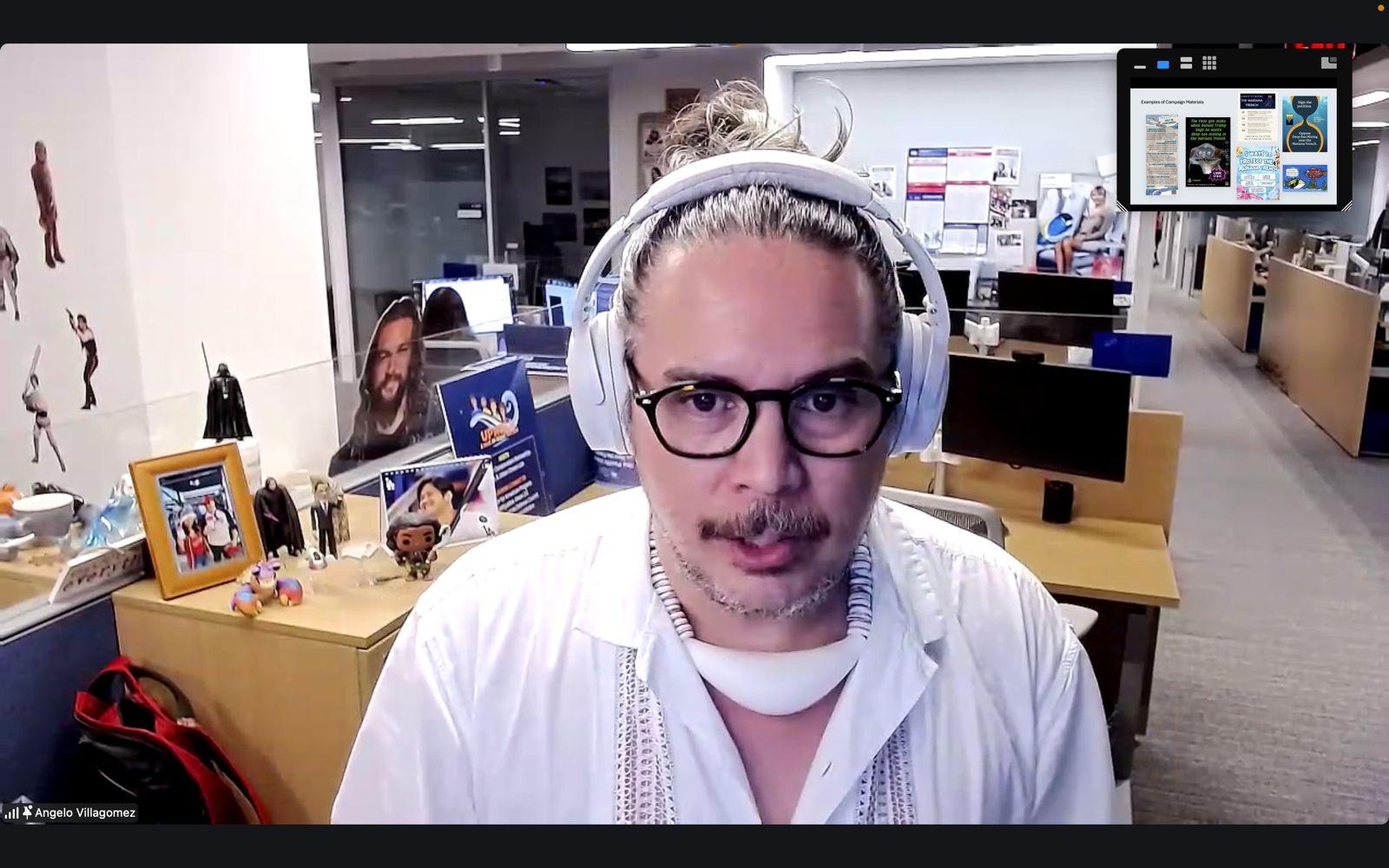
The potential opening of waters near the Mariana Trench to deep-sea mining dominated discussions at the opening of the Marianas Islands Conservation Conference 2026 last March 10, with Saipan-raised ocean advocate Angelo Villagomez warning that island communities must lead decisions about the future of their ocean resources.
Speaking during the conference’s plenary session, Villagomez said proposals being considered by the U.S. federal government could allow industrial extraction in waters surrounding the Mariana Islands, raising environmental, economic, and sovereignty concerns.
“Our communities are on the front lines of decisions that pit jobs against conservation, energy development against cultural values, and national economic ambitions against local ways of life,” Villagomez told participants attending the virtual conference.
Villagomez, a senior fellow at the Center for American Progress and a longtime ocean conservation advocate, said the debate over seabed mining is part of what scientists call the “Blue Acceleration”—a global race among industries competing for resources and space in the ocean.
Fishing, offshore energy, marine protected areas, and seabed mining are increasingly competing for the same ocean spaces, he said, creating new pressures on coastal and island communities.
“The forces shaping our ocean future are big, fast, and global,” Villagomez said. “But the decisions about what happens in our waters should be made by our people, not in some distant capital.”
Villagomez noted that the existing Mariana Trench Marine National Monument already protects about a quarter of the waters surrounding the Marianas from deep-sea mining, but roughly 75% remain unprotected from potential extraction.
He credited strong civic engagement in the region for mobilizing opposition to the proposed mining effort, saying more than 60,000 comments, petitions, and letters were submitted during the recent federal request for information process.
Villagomez urged island residents and leaders to continue building alliances and advocating for conservation policies that prioritize indigenous stewardship and local control.
“Those of us who call the Marianas home are the proud stewards of 10% of all U.S. waters,” he said. “We are not just island communities—we are ocean people.”
Earlier in the conference, Guam Sen. Sabina F. Perez delivered the welcoming remarks, thanking organizers and participants for sustaining regional collaboration on conservation.
Perez said gatherings like the Marianas Islands Conservation Conference bring together scientists, policymakers, cultural leaders, and community members to address environmental challenges affecting the region.
“Bringing together scientists, conservation practitioners, policy makers, cultural leaders and community members is no small task,” Perez said. “Your work helps create the space where collaboration and solutions can grow.”
She stressed that conservation in the Marianas must integrate both scientific research and indigenous knowledge.
For Chamorro communities, Perez said, the connection to land and sea is not just environmental but cultural and spiritual.
“When our forests grow silent, we not only lose species—we lose stories, relationships, and living systems that have shaped our identity as indigenous peoples,” she said.
Perez also pointed to ongoing threats to island ecosystems, including climate change, invasive species, pollution, unsustainable development, and deep-sea mining.
She noted that she previously introduced a Guam legislative resolution urging caution and stronger protections before commercial seabed mining proceeds, citing scientific concerns about potential habitat destruction and long-term impacts on fisheries and ocean health.
“For our communities, these risks are not theoretical,” Perez said. “Our food security, our livelihoods, and our cultural identity are tied directly to the ocean.”
Aside from Villagomez, a panel discussion on the knowledge and data gaps surrounding the Outer Continental Shelf request for information on deep-sea mining was also held on the first day of the virtual conference.
Panelists include Henry Fandel, Eve Hallock, Dean Palacios, and other researchers and policy experts who will discuss scientific uncertainties and policy considerations tied to potential seabed mining in waters near the Mariana Trench.
A speaker session focusing on marine systems research followed as part of the conference’s scientific presentations.
Activities resume on March 11 with the “Birds and More!” speaker session starting at 7am, featuring presentations by Rebecca Krasa, Eben Paxton, Lauren Thompson, and other researchers working on avian conservation and biodiversity across the region.
The conference will also host a mentoring session from 11am to noon, led by Rachel Jolley, aimed at connecting students and early-career professionals with conservation scientists and practitioners.
On March 12, the program opens with a session on brown tree snakes from 7am to 8am, featuring speakers Olympia Terral, Martin Kastner, and Amy A. Yackel Adams discussing ongoing research and control efforts targeting the invasive species.
That will be followed by a terrestrial invertebrates session from 8:15am to 9:45am, with presentations by G. Curt Fiedler, Alfred Daniel Johnson, and C.J. Paulino.
The Marianas Islands Conservation Conference, now in its eighth year, is organized by the regional conservation group Tano Tasi Todu and brings together researchers, government officials, conservation practitioners, and students from Guam, the CNMI, and across the Pacific to share research and strategies for protecting island ecosystems.
Share this article: