CUC outlines $1.3 Billion funding request
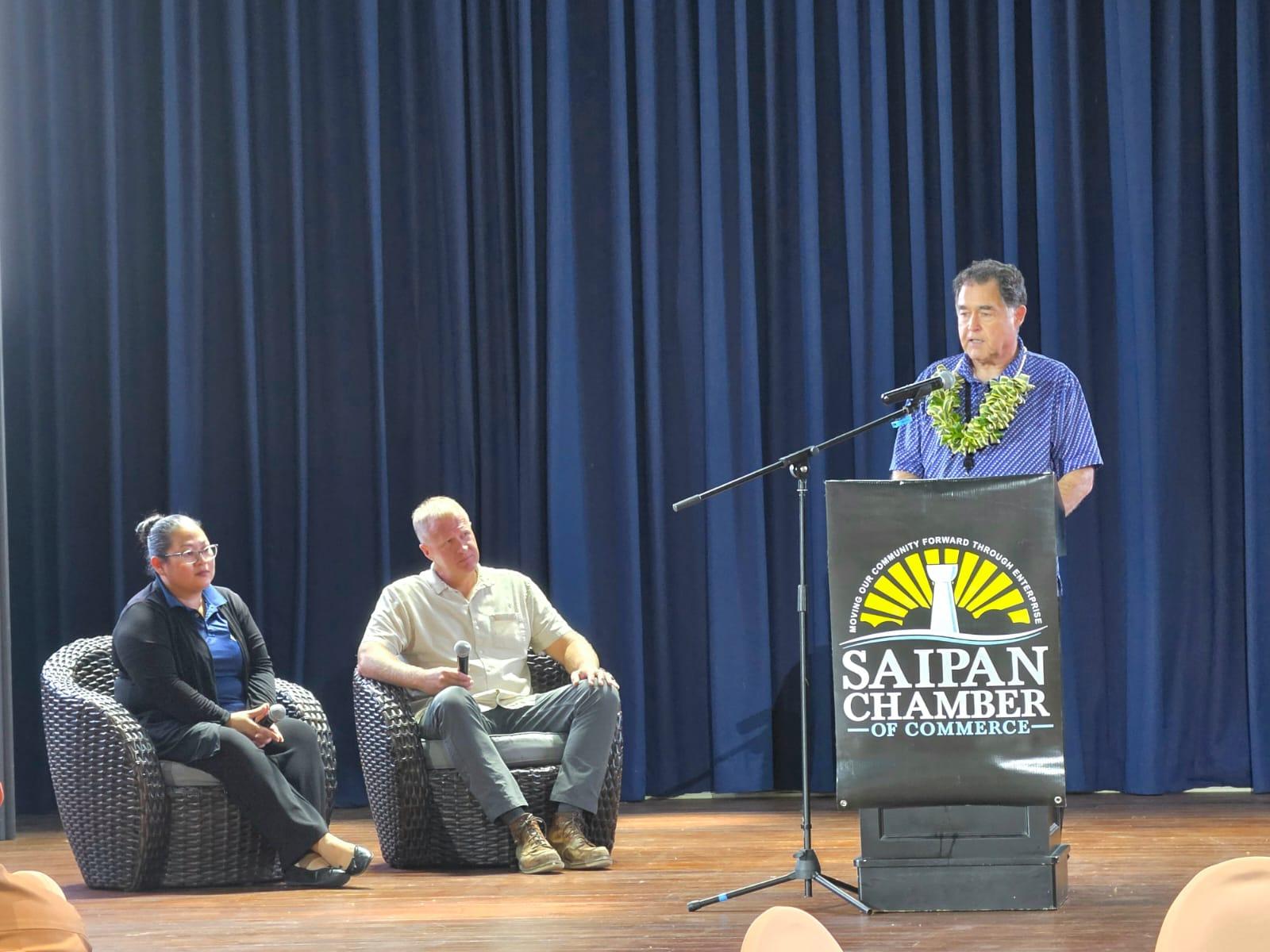
At the Saipan Chamber of Commerce General Membership Meeting on July 1, the Commonwealth Utilities Corporation (CUC) laid out a sweeping, multi-billion-dollar vision to transition the islands from fragile, storm-battered utility grids to a hardened, diversified infrastructure.
Addressing the business community following recent devastating storms, CUC Executive Director Kevin Watson and key utility engineers outlined an aggressive roadmap spanning immediate tactical fixes, massive federal funding requests, and an ambitious shift toward renewable energy by late 2027.
Looking past immediate repairs, CUC Executive Director Kevin Watson has submitted a massive $1.3 billion ($700M for the CUC Power Priority Project and $600M for Water & Wastewater Priority Projects) funding request to Office of Local Defense Community Cooperation(OLDCC) on March 1,2026. The funds are strictly partitioned to address systemic vulnerabilities of the island’s power and water sectors.
According to Watson this funding would transition vulnerable overhead lines to underground systems—starting with critical facilities like the hospital—and universally replace wooden power poles with storm-resistant concrete variants.
"The concrete poles proved that they could withstand [the winds]. Only two or maybe three concrete poles fell down out of 600 during this storm, so that is a good testament of how well they hold up... that is a good investment for long-term stability."
Designed to combat the rising threat of saltwater intrusion into the islands' freshwater aquifers, this package includes a major ocean desalination plant for Saipan, alongside sweeping wastewater treatment upgrades for Tinian and Rota.
CUC Utility Coordinator for Non-revenue Water engineer Joel Hoepner noted that immediate lessons from the recent storms are already being implemented to protect existing assets.
"We did learn that because of the wind and the rain and the prolonged time... there was an ingress of water into these hardened facilities. So we are going a step further, we're covering the generators inside these buildings... to make sure that the wind and the rain can't get into the building."
To shield the community from volatile global diesel prices, CUC is actively aggressively pursuing renewable energy integration. Plans are underway to establish 53 MW of solar power in Saipan, 11 MW in Tinian, and 3 MW in Rota by December 2027. This initiative, coupled with a 4-hour battery backup system, will allow the utility to turn off diesel engines during daylight hours.
When asked by community members about alternative renewables like wave-buoy generation, Watson confirmed that all options are on the table.
"We're not eliminating any technology. Personally, I think diversification would be the answer. We are presently pursuing a geothermal grant... looking at all technologies to diversify and become more reliable and less impacted by the market."
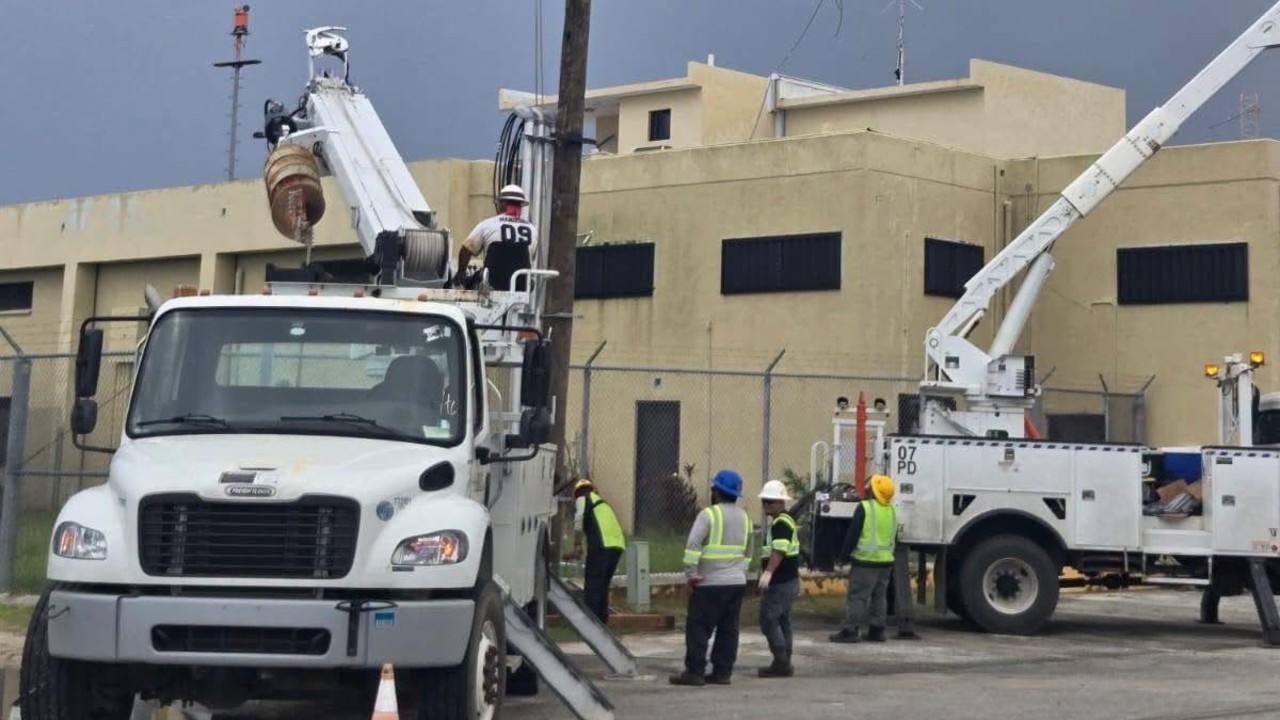
As the meeting closed, officials took a moment to address the grueling reality of post-storm recovery. Crews from the Guam Power Authority (GPA) have been flying in to assist, working grueling 16-hour shifts to reconnect homes and businesses.
When asked why local CUC crews were clocking out at 5:00 PM while GPA crews worked into the night, Watson offered a poignant reminder of the human toll of the storms.
“Our linemen... have families and homes that are damaged," Watson explained. "They have to have some time to be able to take care of their families, and their homes too, to restore and protect their families. We don't want them to get burned out or injured due to exhaustion.”
Share this article: