CUC weighs rebuilding Tinian power plant as transformer shortages, cash crunch hamper recovery
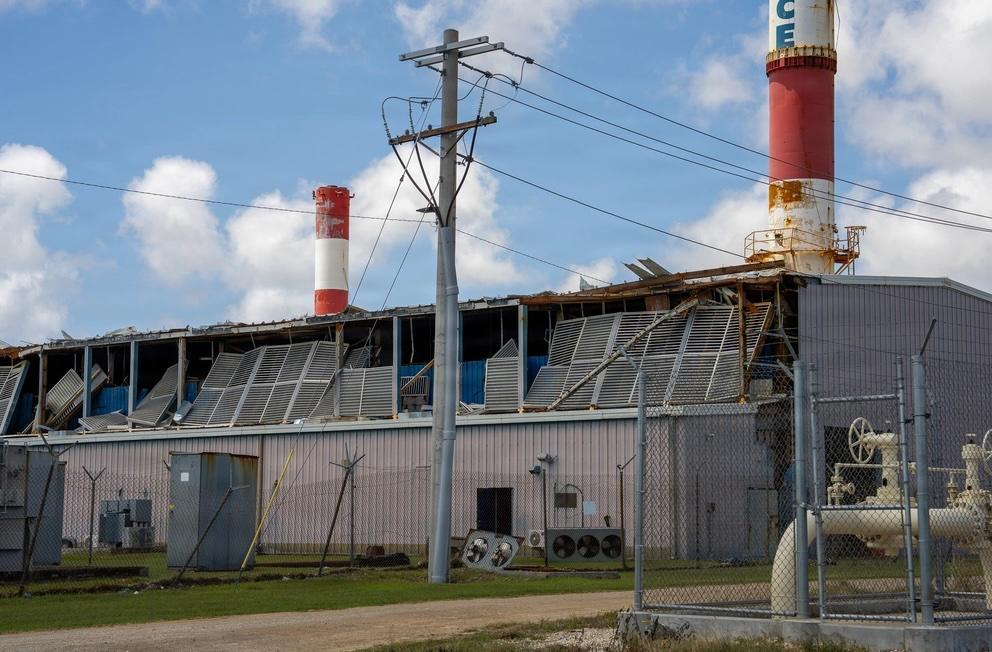
The Commonwealth Utilities Corp. is weighing whether to repair Tinian's storm-damaged power plant or build an entirely new facility, with federal engineers still analyzing which option would provide the best long-term value following Super Typhoon Sinlaku.
Speaking after CUC’s special board meeting last June 25, executive director Kevin Watson said specialists from the U.S. Army Corps of Engineers, Federal Emergency Management Agency, U.S. Department of Energy, and CUC have completed inspections of the power plant and are preparing a cost-benefit analysis.
"The Army Corps of Engineers, working in coordination with FEMA and CUC and Department of Energy, are all doing assessments and analyzing and doing cost-benefit analysis to see what will it cost to repair the structure, the building, and repair the engines versus what if we build a new building and new generators."
Watson said the engineering team has completed its field work but has not yet submitted its recommendations.
"They've brought a team of five or six experts... mechanical, structural, electrical. They've done the assessment, they've gone [and] looked at the power plant, and they're doing all their analysis and cost-benefit analysis now. They haven't provided us that final report yet."
If the existing plant is rehabilitated, Watson said temporary FEMA generators would remain in service until repairs are completed. If a new power plant is constructed, the temporary generation would likely remain in place for a longer period.
"We're still unknown. Will it be repairing the structure that we have and repairing the engines? Then we would do that route... Or will we do a whole new power plant?"
Watson said CUC also prefers receiving new temporary generators rather than used units, although the final decision rests with FEMA.
"New engines would be preferable to us, but we're not necessarily the ones to make that final decision since FEMA is the one that's providing it."
While planning for Tinian's long-term power future continues, CUC officials told the board that restoration across the CNMI remains constrained by shortages of transformers, utility poles and funding.
During a presentation, chief financial officer Betty Terlaje said CUC has already exhausted its initial shipment of 45 replacement transformers and is awaiting another shipment of more than 100 units, along with additional transformers from the Guam Power Authority. Even then, the utility expects it will still need roughly 200 more transformers before restoration work can be substantially completed.
Because of the shortage, CUC continues prioritizing critical infrastructure, water wells, homes with medically vulnerable residents and other high-priority locations before restoring power to remaining customers.
Terlaje also reported that approximately 100 replacement utility poles recently arrived and are already being installed after clearing FEMA logistics. The utility ultimately expects to need about 814 replacement poles, including a contingency for additional storm damage discovered during repairs.
CUC is also pursuing FEMA funding for a $14-million hazard mitigation project that would replace aging wooden poles with concrete poles in critical areas. However, Terlaje noted that concrete poles cost between $5,000 and $7,000 each, making long-term system hardening dependent on additional federal assistance.
The financial burden of recovery also continues to weigh heavily on the utility.
Terlaje said CUC's request for an advance on an estimated $75 million in recovery expenses was denied, forcing the corporation to pay for restoration work upfront while awaiting FEMA reimbursement. To preserve cash, CUC has negotiated 90-day payment terms with vendors, delayed routine purchases unrelated to storm recovery and sought greater flexibility from suppliers.
She said the utility is also pursuing legislative authority that would allow it to secure financing, including a potential federal loan through the Rural Electric program, to bridge the gap until federal reimbursements are received.
Board members also discussed the need for additional line crews and bucket trucks to accelerate restoration, saying the remaining outages largely involve isolated pockets requiring new transformers, conductors or other specialized repairs. CUC continues working with FEMA and the Governor's Office's Public Assistance program to secure reimbursement and funding needed to complete recovery while maintaining normal utility operations.
Share this article: