Deep Sea Rare Minerals says no license yet for mining near Guam, CNMI
Deep Sea Rare Minerals CEO Tony Romeo said his company does not yet hold a federal license to explore for deep-sea minerals near Guam or the Northern Mariana Islands, pushing back against reports suggesting the firm had already been approved.
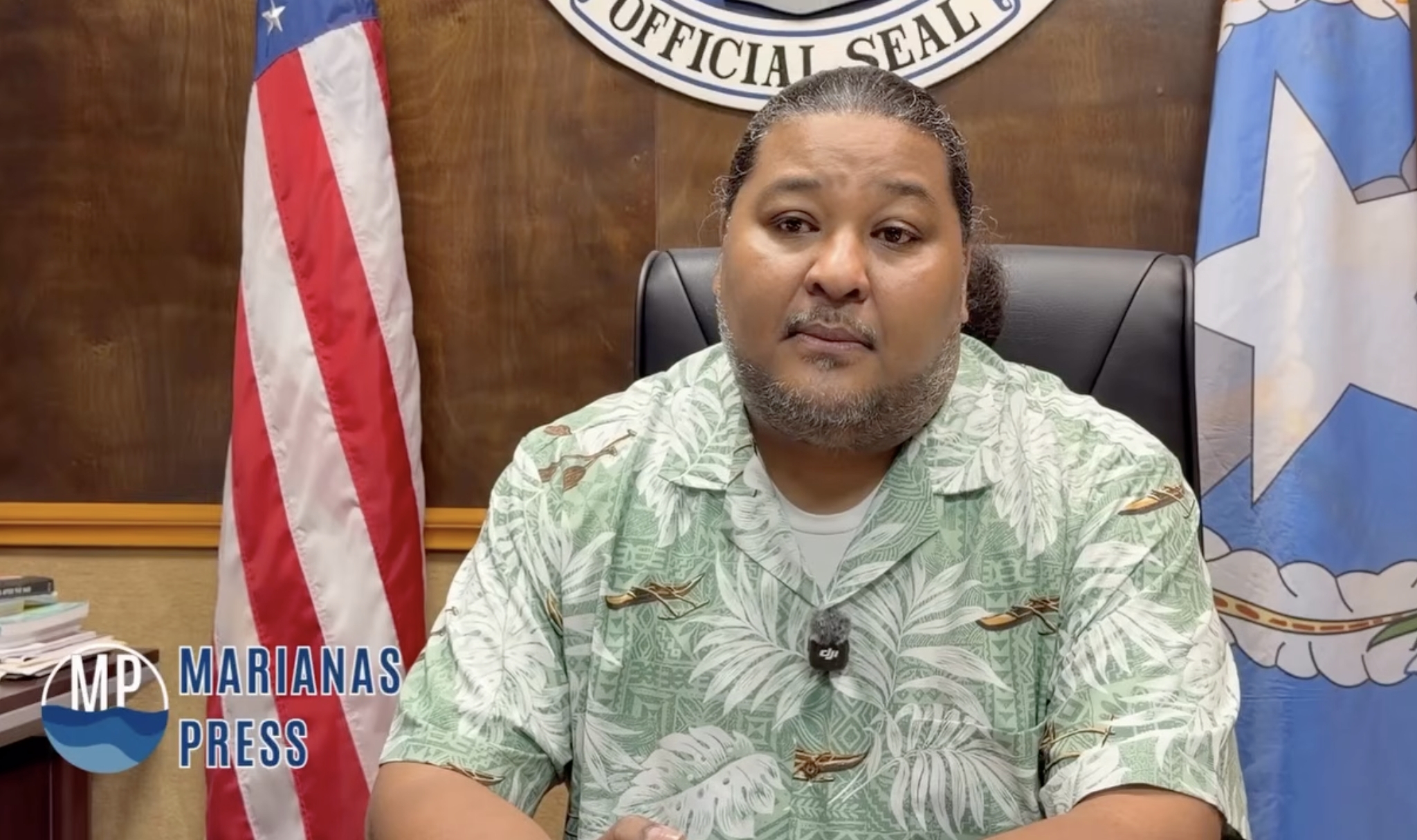
“We are in substantial compliance with the [National Oceanic and Atmospheric Administration] process for an exploration license at the moment, so we do not have a license, nor do we have any actual formal areas assigned to us,” Romeo said in a recent Zoom interview with Marianas Press.
He explained that “substantial compliance” gives the company priority rights over areas it has applied for, including areas “one of those being, as you’ve mentioned, several hundred miles off the coast of Guam,” but does not authorize exploration or mining activity.
Deep Sea Rare Minerals grew out of Deep Sea Vision, a survey company originally formed to search for Amelia Earhart’s lost aircraft. That effort drew international attention several years ago but ultimately proved unsuccessful.
“We didn’t find Amelia’s plane,” Romeo said. “We thought we had found it, and it turned out to be rocks or nodules.”
Since then, he said the company has evolved into a full-scale mineral resource firm pursuing opportunities in the deep-sea mining sector through multiple regulatory pathways.
Romeo said there are two separate federal processes governing deep-sea mineral activity involving U.S. companies.
One is the NOAA licensing process, which applies to international waters beyond 200 nautical miles.
“They basically are licensing U.S. companies to operate in international waters that’s beyond the jurisdiction of any country,” he said.
The second process is overseen by the Bureau of Ocean Energy Management, or BOEM, which governs leasing within the U.S. Exclusive Economic Zone, including waters around Guam and other U.S. territories.
“That’s a different process,” Romeo said. “So two separate processes.”
Romeo said NOAA recently introduced a consolidated application process allowing companies to apply simultaneously for exploration and recovery licenses, potentially speeding up approvals.
“I would expect us to also be applying for a consolidated license at some point this year,” he said. “I hope that we’ll have enough data and we’ll be further along down the process where we could have a license by some point in 2027.”
He stressed that any approval would come only after environmental data collection and regulatory review.
“We’ve got to collect environmental data. We’ve got to make sure that the regulators that are overseeing it are happy and they’ve signed off on the equipment that we’re going to be using,” Romeo said.
Romeo addressed opposition from Guam, the CNMI, and American Samoa, where thousands of public comments have raised environmental and economic concerns about deep-sea mining.
He said the areas proposed for mining are targeted and have very low biological activity compared with other parts of the ocean, and that the equipment used is designed to minimize disruption to the seafloor.
Romeo also said deep-sea nodule recovery produces less waste than traditional land-based mining, without providing precise numerical claims.
Although proposed activity would occur outside island waters, Romeo said local communities could still benefit.
“There will definitely be ways for the community to get involved, either working directly with companies like Deep Sea Rare Minerals,” he said. “We’ll be bringing jobs to the islands like Guam and American Samoa.”
He confirmed a meeting with regional leaders, including American Samoa officials, to discuss possible partnerships.
On a broader level, Romeo framed deep-sea mining as a way to secure critical minerals domestically and reduce dependency on foreign supply chains.
He also said he believes that as more is understood about the technology and its impacts, public and environmental perspectives on deep-sea mining may change.
Share this article: