DPW to resume Saipan beach restoration using dredged sand after Bavi assessment
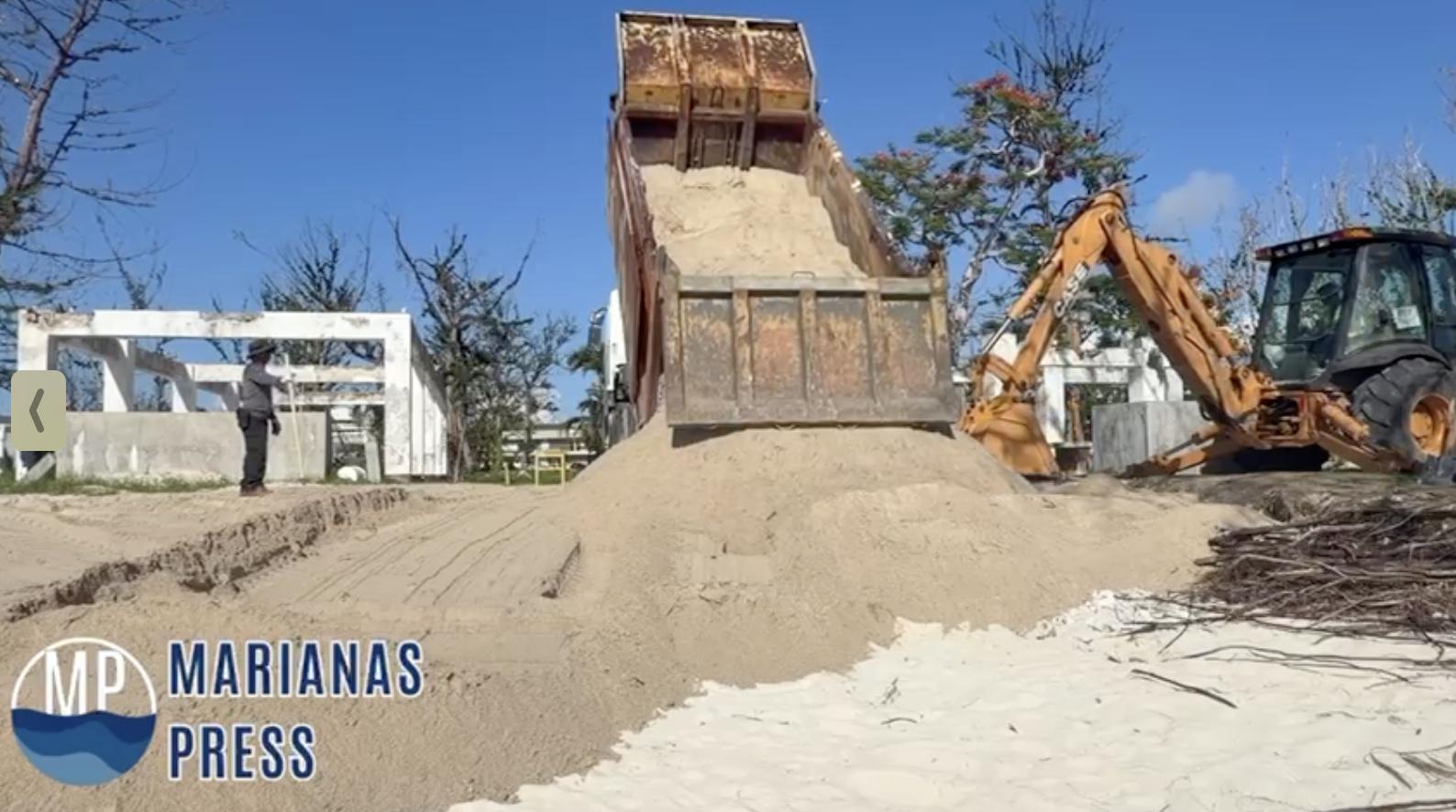
The Department of Public Works is preparing to resume its beach restoration program by placing sand dredged from the Smiling Cove Marina navigation channel back onto eroded Saipan beaches, with Secretary Ray N. Yumul saying engineers are reassessing conditions following Super Typhoon Bavi before restarting the work.
Yumul said DPW engineers recently inspected Smiling Cove Marina and found the sand spit had reformed after the typhoon.
"I had engineers go out and assess the Smiling Cove Marina and it looks like the sand spit came back."
He said DPW and the Department of Lands and Natural Resources are now reviewing how to restart the beach nourishment project.
"Between DPW and DLNR, we're actively seeing how we can restart the sand spit program and go back and remove any new deposits. So, that's actively being reviewed."
Yumul said portions of the sand previously placed along Beach Road near Saipan Community School were washed away by Bavi, but that was expected.
"Some portions did wash, which is normal. The goal is we stage the sand up by the beachhead and we want natural erosion. We want the sand to slowly go back into the ocean so that the beach itself will be rebuilt or replenished."
He said DPW will return to areas where storm surge carved deep channels and replace the lost sand.
"We're going to try to go back to those areas and replace those sections with sand. We still have some piles of sand, not a lot, but we'll go back and try to mitigate that so that it's not a danger to the community."
The beach nourishment effort began after Super Typhoon Sinlaku deposited thousands of cubic yards of sand into the Smiling Cove Marina navigation channel, restricting vessel traffic.
Rather than hauling the dredged material to a disposal site, DPW launched Project BEACH (Beach Emergency Access and Coastal Hazard Repair) to reuse the sand to restore storm-damaged beaches and beachfront parks across Saipan. The initiative has involved the Bureau of Environmental and Coastal Quality's Coastal Resources Management Program, DLNR, the U.S. Army Corps of Engineers, Federal Emergency Management Agency, and U.S. military Seabees.
During the project's launch, Yumul said the goal was to improve public safety by rebuilding beaches damaged by Sinlaku.
"This area of Saipan suffered substantial beach erosion due to Super Typhoon Sinlaku. And we are conducting restoration efforts to safeguard the community to make sure that as the beachgoers come back, they are not injured while here at the parks along the beaches."
Instead of discarding the dredged material, DPW opted to recycle it for shoreline restoration.
"Instead of having the sand brought over to a disposal site, let's go ahead and reuse the sand and repair all the damaged beaches and parks that are fronting the ocean so that we can restore the beachheads."
Project BEACH began on June 3, with crews restoring beaches along Beach Road before moving to Pacho Beach Park and Pakpak Beach. By early July, approximately 4,500 cubic yards of sand had been redistributed, with the total expected to reach about 5,500 cubic yards upon completion of work at Pakpak Beach. DPW also transported sand for restoration work at American Memorial Park at the request of the National Park Service.
Share this article: