Just hours after the Senate passed the fiscal year 2027 budget with sweeping amendments, the House of Representatives last Sept. 27 rejected the Senate version, 17-1 with one abstention, forcing the two chambers into another conference committee with the new fiscal year just days away.
The House had unanimously passed its $100.73-million FY 2027 budget last Sept. 18. The Senate took up House Bill 24-108, HS1, during an emergency session last Sept. 27 and approved an amended version before returning it to the House.
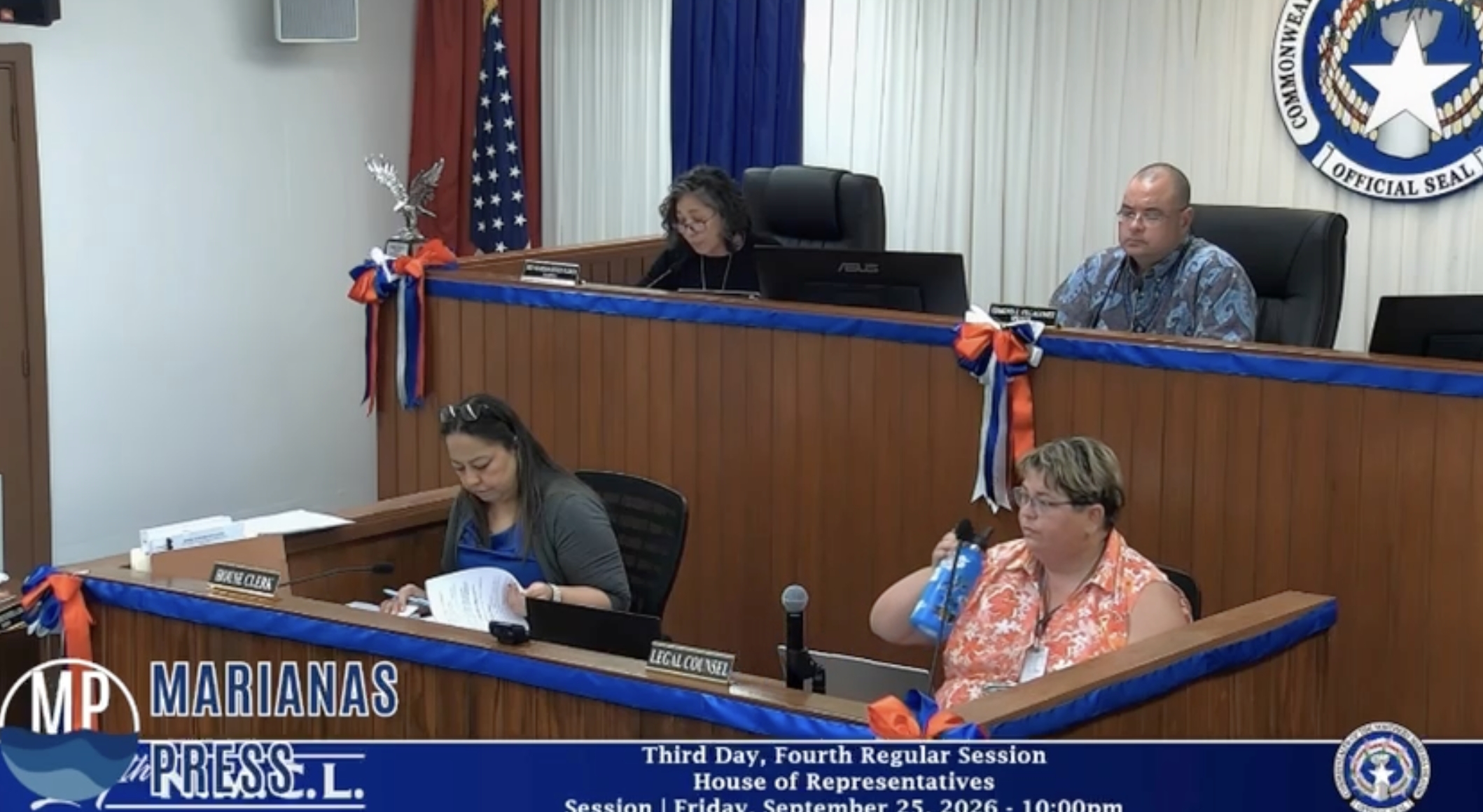
Later that day, the House convened its own emergency session and voted to reject House Bill 24-108, HS1, SD1, and send the competing versions to conference.
Speaker Edmund S. Villagomez named House Ways and Means Committee chair Rep. John Paul Sablan to lead the House conferees, along with Reps. Ralph N. Yumul and Joel Camacho. House floor leader Rep. Marissa Flores was named alternate.
The Senate amendments made substantial changes to the House spending plan, including government work hours, Public School System funding, the governor's reprogramming authority, and the treatment of revolving, special, and other available funds.
Senate Fiscal Affairs Committee chair Jude U. Hofschneider said the Senate found the House personnel allocation of $32.33 million was enough to fund only about 38 hours per pay period, despite a House provision mandating a 64-hour pay period. An additional $21.8 million would have been needed to fund the remaining 26 hours, he said.
The Senate consequently deleted the 64-hour mandate and revised Schedule A to fund approximately 53 hours per pay period for affected government operations.
“The Senate acknowledges the payroll shortfall. However, the collections do not lie,” Hofschneider said.
The Senate version also allocated $25.61 million to PSS, with about $16.18 million earmarked to maintain a 64-hour pay period for the first two quarters of FY 2027. Additional money would have to be identified for the third and fourth quarters from excess funds from suspended earmarks, 50% of certain revolving and special accounts, and education tax credits.
“The Senate's version allocates 25% of available resources based on a projected revenue to PSS, which equates to approximately $25 million,” Hofschneider said.
Among other changes, the Senate reduced the governor's reprogramming authority from 100% to 50%; proposed reserving 50% of certain revolving and special-account balances for legislative appropriation to PSS and retiree pensions; and sought to reserve certain FEMA reimbursements and consumer protection settlement funds for appropriation by the Legislature.
Hofschneider said the Senate changes were made with the Commonwealth's financial condition in mind.
“It is the position of the Senate to avoid a government shutdown, and with the passage of the Senate's version of the budget, we hope to achieve that objective,” he said.
The House, however, raised concerns about several of those changes.
Sablan, the author of HB 24-108, pointed to what he described as significant reductions affecting the Department of Commerce, Northern Marianas College, and PSS, as well as 19 additional NOPs, or number of personnel positions, provisions involving FEMA funds and the Senate's changes to the governor's reprogramming authority.
“In the motion for rejection, I support the rejection of this Senate draft version for many reasons,” Sablan said.
He cited “the significant decrease on the Department of Commerce, the significant decrease of NMC and PSS, which is in the tune of slightly over close to $15 million.”
Sablan also raised concerns about “possible problematic provisions” involving Federal Emergency Management Agency funding and the changes to the governor's reprogramming authority.
“So for these reasons, Mr. Speaker and members of this August body, I ask that we reject and that we enter into a Conference Committee,” Sablan said.
The House and Senate conferees must now reconcile the competing versions before a compromise budget can return to both chambers for approval.
Share this article: