In 3-2 vote, CEIA board advances revamped tax incentive rules

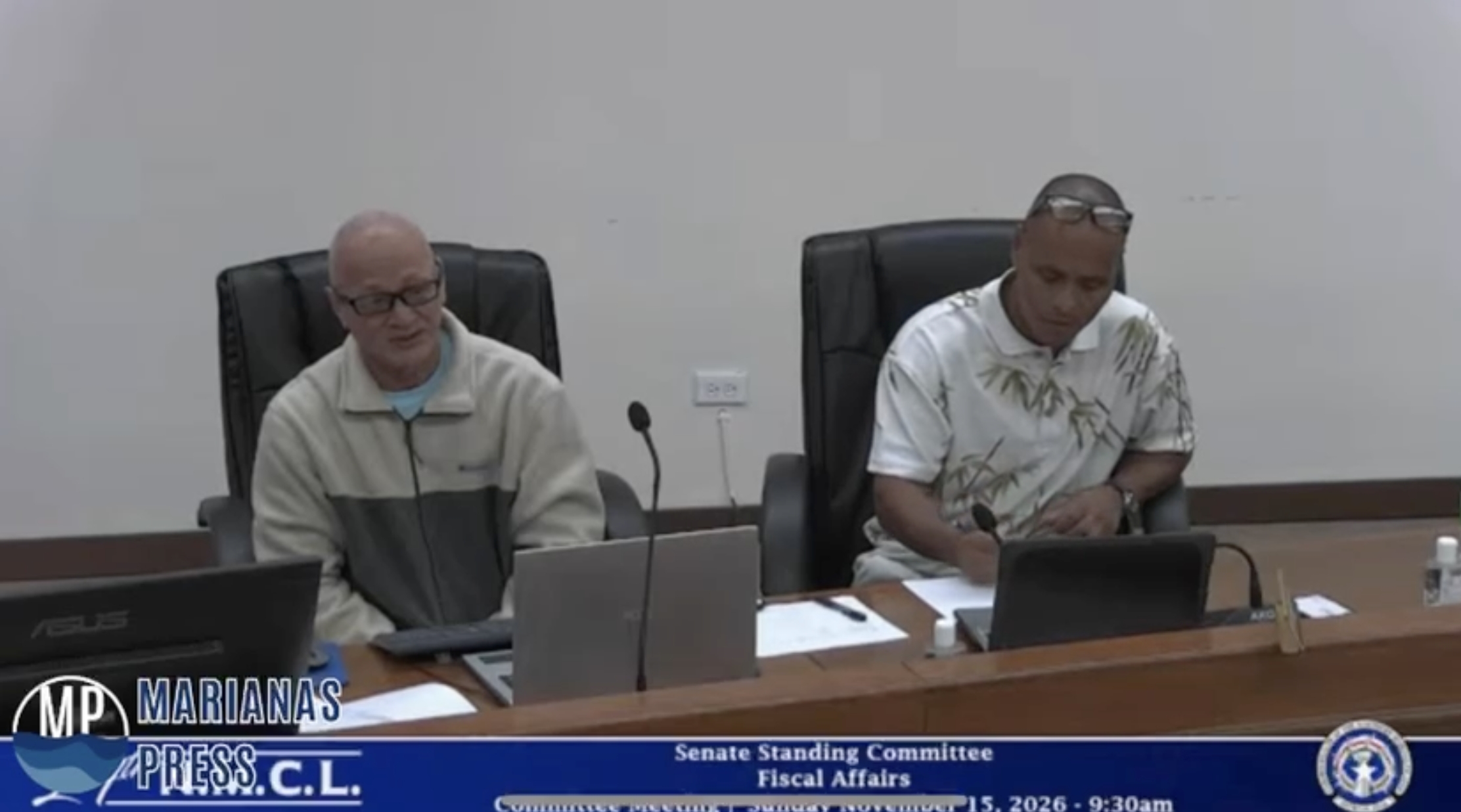
The Commonwealth Economic Incentive Authority (CEIA) board voted 3–2 Monday morning, November 16 to publish amended Chapter 20 regulations for a new 30-day public comment period.
The narrow decision—backed by CEIA Chairman Anthony C. Torres and board members David Berger and Noel Calvo—rewrites the core mechanics of the authority’s flagship incentive program around payroll-based thresholds aimed at quickly filling Garapan’s empty storefronts, overriding objections from Vice Chair Tina Azarvand and board member Mark O. Rabauliman that the revised draft strips out critical anti-abuse safeguards in a jurisdiction with virtually no local tax-audit enforcement.
Codified as Chapter 195-20 of the Northern Mariana Islands Administrative Code—and also referred to as Article 20—Chapter 20 serves as the substantive rulebook governing business licensing, compliance, and tax abatements inside designated CNMI Economic Incentive Districts, including Garapan. Monday’s meeting at the Casa Marianas conference room was convened to review public comments submitted on the initial draft of Chapter 20 and decide between two formal paths: adopting the original regulations that had already completed public review or sending an amended version out for a fresh 30-day comment period.
First published in the Commonwealth Register on Sept. 15 after six to seven months of drafting tied to post-Typhoon Sinlaku recovery efforts, the original version of Chapter 20 eliminated minimum capital investment thresholds and instead scored applicants across 10 public-benefit criteria totaling 100 points. Under that framework, businesses earned tiered tax relief of up to 85%—an effective corporate tax rate of roughly 3% to 7.5%—by investing in workforce development, infrastructure rebuilding, food security, Tinian and Rota projects, or community initiatives such as medical referral flights, CPR trainings, and free tax workshops. It also included strict anti-abuse rules modeled on the federal Employee Retention Credit.
The amended Chapter 20 draft circulated before Monday’s meeting fundamentally alters that formula. Following a committee review of public comments calling for greater certainty of tax outcomes and stronger upfront relief, the revised regulations pivot away from community-benefit scoring toward financial and payroll benchmarks—requiring companies to meet wage or contribution thresholds, such as $50,000 a year over a 20-year license term, alongside early investment incentives.
Proponents argued the overhaul is necessary to make Chapter 20 workable for struggling businesses and prospective investors alike. During public comment, Kenton, chief operating officer of Pacific Sunrise Corporation and a former Garapan restaurateur who closed his doors last year, urged the board to treat the incentive rules as an urgent economic bridge to stop local operators from bleeding cash or leaving the island.
Torres emphasized that lawmakers expanded CEIA’s mandate from a 20-hectare free trade zone near the airport to cover all of Garapan, and said Chapter 20 must offer a faster, simpler alternative to the Commonwealth Economic Development Authority’s Qualifying Certificate program, which grants 0% tax rates for large capital projects. Targeting a 3% to 7% effective corporate tax rate under Chapter 20, Torres said, will draw tenants into vacant buildings immediately while preserving the board’s power to vet applicants and "put a spigot to the faucet" if needed.
"Right now, our businesses are hurting," Torres said. "Let’s fill these buildings up. Let’s keep it simple."
Interim Executive Director Joshua Cook added that scaling down Chapter 20’s entry thresholds could allow the program to capture both major employers and smaller offices or remote teams, arguing that requiring companies to run side community programs distracts from their core operations and reduces the wages and taxes they generate.
Azarvand, tax lawyer, countered that replacing Chapter 20’s public-benefit structure with payroll and financial thresholds turns the program into "QC 2.0" while locking out bootstrapped local startups that lack prior tax or payroll histories.
Her sharpest objection focused on a major omission in the rewritten Chapter 20 text. While the original version contained anti-abuse rules preventing applicants from gaming the program, Azarvand said the amended draft drops exclusions barring majority owners from claiming tax breaks for paying blood relatives or spouses. Pointing to loopholes exploited under Puerto Rico’s Act 20 and Act 22 incentives, she noted that not a single CNMI income tax audit has been defended this year and that the government lacks certified tax auditors—leaving the agency unable to verify family relationships across different surnames.
Without those guardrails in Chapter 20, Azarvand warned, an owner could collect a tax break simply by putting a spouse or sibling on payroll for $50,000 a year.
Tensions boiled over during the initial roll call when Azarvand voted "yes" under the impression the board could insert anti-abuse rules into Chapter 20 before publication. When Torres clarified that the vote would send the circulated draft straight to the Commonwealth Register without changes, Azarvand immediately retracted her vote and challenged Berger.
"So, you’re voting in favor of no changes, no anti-abuse rules," she said. "By saying ‘aye,’ you say it’s good with paying your relatives."
Torres abruptly halted the open session and called an executive session.
When the board reconvened on the record, Azarvand voted "no," calling the amended Chapter 20 draft "incomplete." Rabauliman—who had initially moved to advance the amendments in hopes of attracting anchor industries—also flipped to "no" after Torres confirmed that adding anti-abuse provisions after the comment window would likely restart the 30-day public notice clock.
Torres, Berger, and Calvo held firm to pass the motion 3–2, sending the amended Chapter 20 regulations to the Commonwealth Register for another 30 days of public comment before the board can take up final adoption.
Share this article: