PSS Weighs Consolidations, Furloughs Before January Deadline as April Cash Shortfall Looms
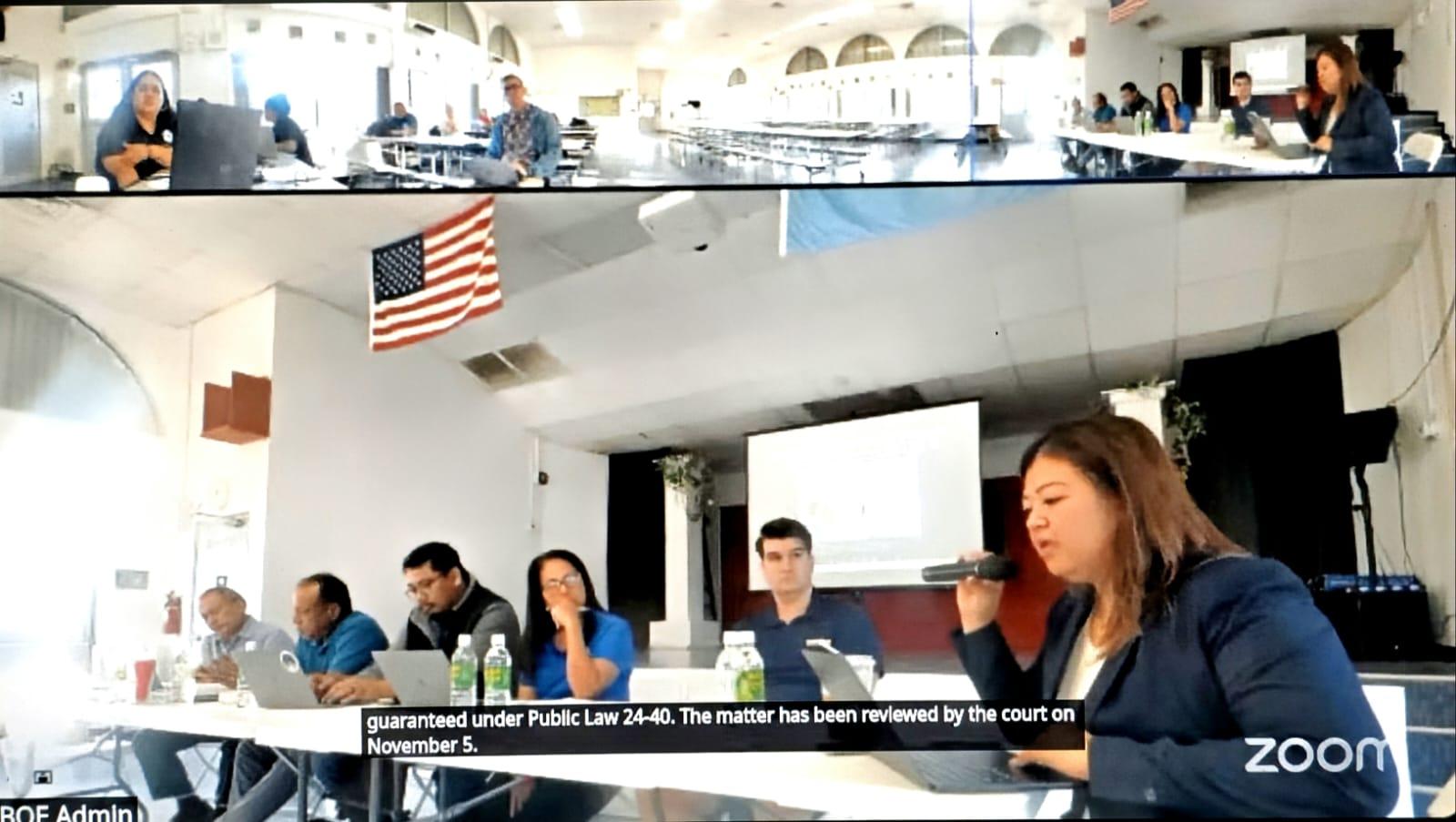
While a recent legislative veto override bought the Public School System (PSS) temporary breathing room with a front-loaded $16 million allocation for the first two quarters of Fiscal Year 2027, education officials warned during November 12’s CNMI State Board of Education meeting on Tinian that the district still faces a severe cash shortfall by April—making January 8 a critical deadline to decide on potential school consolidations, central office restructuring, and furloughs.
Gathering at Tinian Elementary School Cafeteria for the board’s regular meeting of 2026, Interim Commissioner of Education Jacqueline Che outlined the district’s fragile fiscal outlook.
Currently, PSS continues to operate on a four-day instructional week and a 64-hour biweekly schedule for staff. Under Public Law 24-40, the system’s General Fund appropriation stands at $25 million. While the Legislature’s recent override of the governor’s line-item vetoes restored roughly $16 million across the first two quarters, only $8.8 million remains allocated for the third and fourth quarters.
“While this provides us with some relief, the override does not eliminate our financial challenges—it has given us more time to plan intentionally,” Che told the board. “Our financial simulations indicate that maintaining the current operations without any adjustments could result in a significant cash shortfall around April 2027.”
Because of that looming fiscal cliff, Che identified January 8, 2027—the end of the first semester—as a decisive planning milestone. By that date, PSS leadership must evaluate its cash position and determine whether targeted adjustments are required, including school consolidation, central office consolidation, and employee furloughs.
Che emphasized that these remain planning scenarios rather than final decisions, noting that no personnel or furlough lists have been drafted. However, she confirmed that leadership has already begun meeting with school principals and central office directors to prepare for potential impacts across the entire district.
Alongside internal contingency planning, PSS is pressing the central government in court. On October 30, PSS filed a lawsuit to protect its constitutionally guaranteed funding share under Public Law 24-40.
“The lawsuit is not about asking for more money,” Che said. “It is about ensuring that funding provided by law for public education is upheld and protected in the CNMI.”
Providing a closer look at cash flow, PSS Finance Director Jonathan Aguon reported that the Department of Finance has complied with the front-loaded budget structure, transitioning to weekly transfers of $674,048—totaling roughly $2.69 million per month—through the first two quarters. PSS is also closely monitoring House Bill 24-115 which unanimously passed the House earlier this week to appropriate $7.2 million in unappropriated funds.
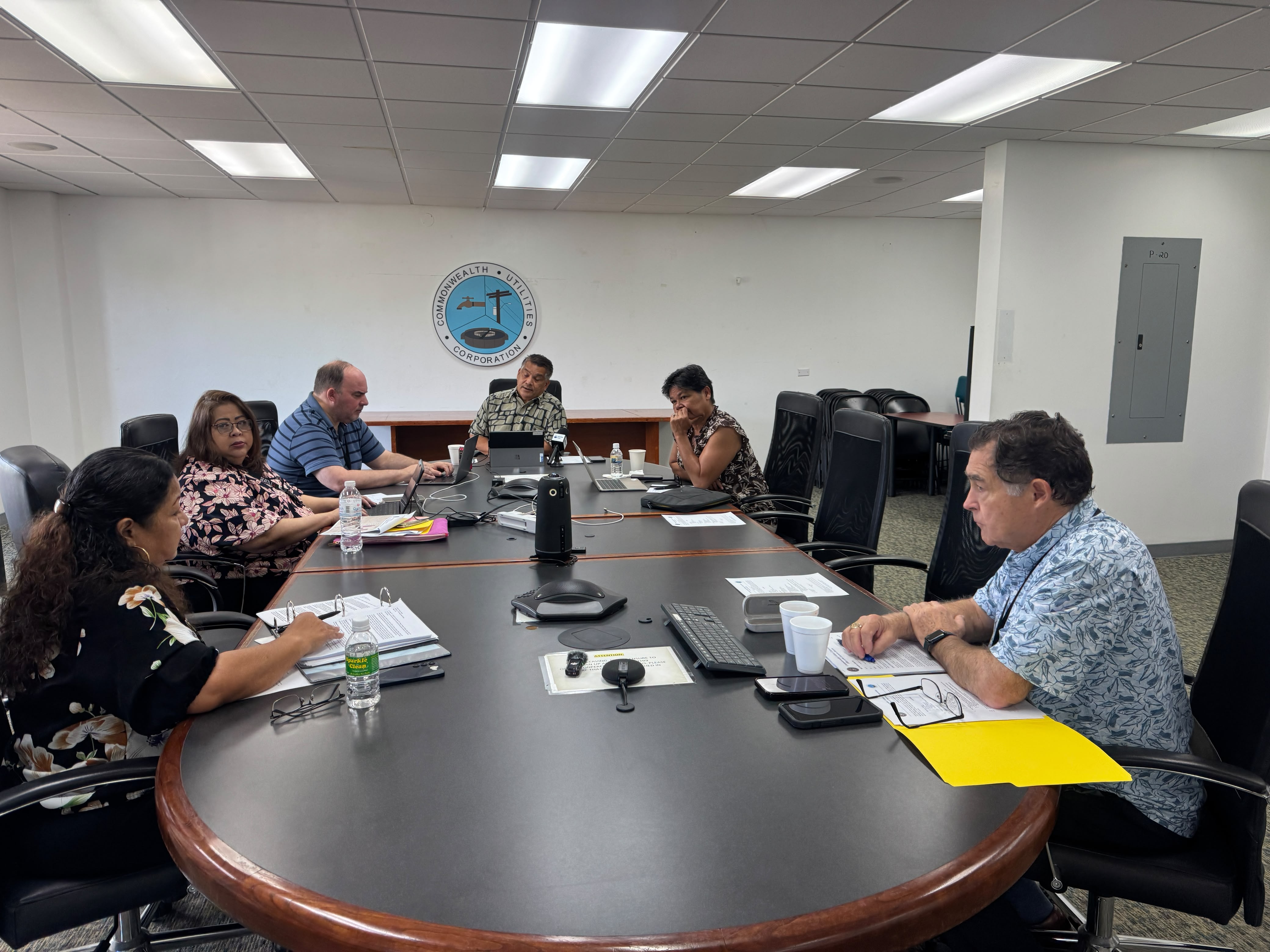
Meanwhile, Board Member and Fiscal, Personnel, and Administration Committee Chair Andrew Orsini—who was congratulated during the meeting on his recent election to the CNMI House of Representatives—expressed optimism that legislative intervention could avert deeper cuts. Orsini announced he is drafting specialized financing legislation to introduce immediately upon taking office in January, aiming to restore all PSS and government employees to 80-hour biweekly schedules and return students to a five-day instructional week. Orsini also called a special FPA committee meeting for next Thursday to review the district's local and federal budget reports in detail, noting that a previous worst-case reduction-in-force scenario had projected losing up to 145 personnel, mostly teachers.
The budget debate also took center stage during the swearing-in of newly elected Teacher Representative Jeremiah Rother, who succeeded outgoing representative Dr. Dora Miura. In his opening remarks, Rother urged the board to re-examine how austerity cuts are distributed between frontline educators and central office leadership.
Rother pointed to the 2017 salary scale adjustments, noting that while most classroom teachers received roughly a 10% raise—half of which was later clawed back during the August 2019 austerity cuts—central office and key management positions received initial increases ranging from 27% to 70%. Even at a reduced 64-hour schedule, Rother argued, many senior management salaries remain ahead of their pre-2017 levels, whereas classroom teachers are earning less than they did prior to the 2017 scale.
“One austerity measure to be looked at when it comes to right-sizing is getting key management back onto their pre-2017 pay scale, or something much closer to it,” Rother said. He also reminded financial planners that because teachers are 190-day employees whose salaries are prorated over the summer, front-loading the first two quarters of the budget will not resolve fourth-quarter summer payroll obligations.
Beyond discussion of finances, board member Antonio L. Borja raised concerns about the impending vacancy of Tinian's board seat—a position left open after he declined to seek re-election due to a potential move and no candidates filed for the general election. Because a recent legal opinion bars the governor from appointing a replacement when a race goes uncontested, a special election must be held within 60 days of election certification. The board vowed to work with the administration to prevent any gap in Tinian's representation.
Share this article: