Saipan oncologist reports promising results in treating betel nut-related oral cancer
Dr. Peter Brett and his team at the Commonwealth Healthcare Corp.'s Oncology Center are reporting promising results from a combination of immunotherapy and targeted medication to treat betel nut-related oral cancer, offering new hope to patients battling one of the most prevalent cancers encountered at the Saipan facility.
The treatment, which combines two intravenous medications to stimulate the body's immune system and block tumor growth, has helped shrink cancers in an estimated 75% to 80% of patients treated at the center, according to Brett.
However, the oncologist emphasized that reducing the size of a tumor does not necessarily mean curing the disease, and his team is preparing a clinical trial to formally evaluate whether the treatment improves long-term outcomes.
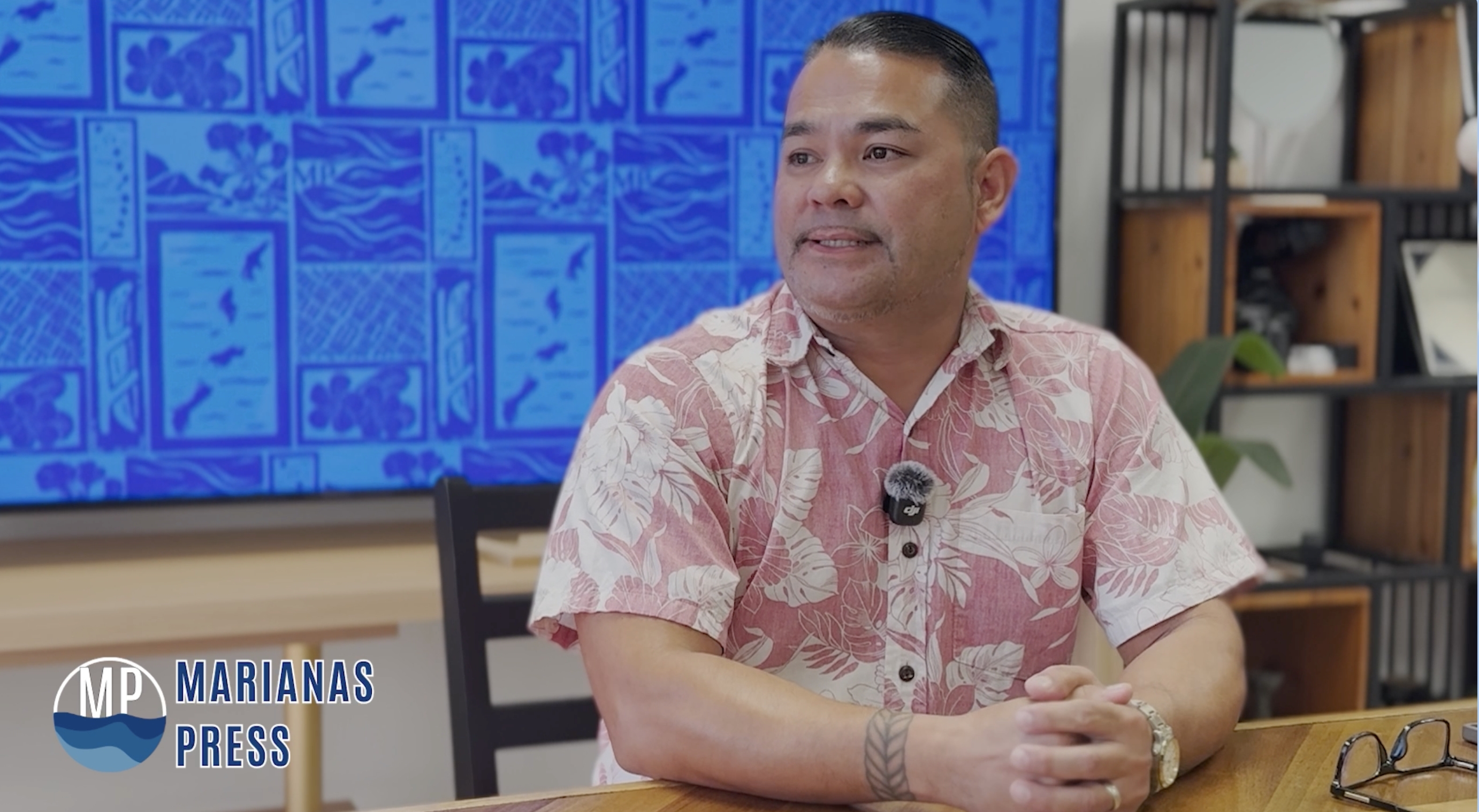
"We tried it, and it works great. It works even better here, I think, than in [the] mainland," Brett said in an interview with Marianas Press.
The treatment combines pembrolizumab, an immunotherapy medication that helps the immune system attack cancer cells, and cetuximab, a targeted medication that blocks signals promoting cancer growth.
Brett said both medications have been available for years, but his team began combining them approximately five or six years ago to treat oral cancers associated with betel nut chewing.
The approach was based on earlier research involving patients whose cancers were linked to smoking or alcohol. However, it was unclear whether the same combination would work against cancers associated with betel nut, the leading cause of oral cancer in the Marianas.
Brett said the results among his patients have been encouraging, although the center has yet to conduct a formal clinical trial establishing its effectiveness specifically against betel nut-related oral cancer.
The Oncology Center is proposing a study involving approximately 20 patients who would receive the combination treatment for about three months before undergoing surgery and, when necessary, radiation.
The proposed study is undergoing review by a hospital research committee, which must determine whether it meets the necessary ethical and research requirements before enrollment can begin.
"We're going to formally study this," Brett said.
Participants would not be charged for taking part in the study and would be enrolled only after receiving information about its potential risks and benefits and giving their consent.
Brett said the objective is to determine whether the combination treatment, followed by surgery and radiation when appropriate, improves cure rates compared with conventional treatment.
"We don't have the long-term data from that yet," he said.
For Brett, who practiced oncology in California for approximately 30 years before moving to Saipan in 2019, the frequency of oral cancer in the CNMI has been one of the most striking differences between practicing medicine on the mainland and in the islands.
He said he previously encountered only one or two patients with head or neck cancers annually. In the CNMI, however, approximately 15 to 20 new oral cancer patients are diagnosed each year in his practice.
"When I got here, I was struck by how many people have oral cancer," he said.
Over the past seven years, Brett estimates he has treated or monitored approximately 75 to 80 people with the disease.
He believes oral cancer is probably the second most common cancer encountered at the Oncology Center, behind breast cancer, although that assessment is based on his clinical experience rather than territory-wide cancer statistics.
The disease also affects younger residents.
Brett said some patients have been diagnosed in their late 20s, while others are in their 30s and 40s. Patients in their 70s and 80s are also affected.
He estimates approximately two-thirds of oral cancer patients in his practice are men, while women account for roughly one-third.
What particularly concerns him is that many patients seek medical attention only after their cancer has reached an advanced stage.
Symptoms may begin with a persistent sore, lump, or pain in the mouth, sometimes accompanied by difficulty swallowing. However, patients may dismiss these warning signs for months before consulting a doctor.
By the time some patients reach the Oncology Center, Brett said, the cancer has already progressed to stage 3 or stage 4, making treatment significantly more difficult.
The first step is confirming the diagnosis through a biopsy, generally performed by an ear, nose, and throat specialist.
Tissue samples are sent to Hawaii Pathology, with results typically available within seven to 10 days.
Once cancer is confirmed, doctors conduct further examinations, including CT scans, to determine how far the disease has progressed and identify the most appropriate treatment.
Early detection can make an enormous difference.
Brett estimates that approximately nine out of 10 patients diagnosed with stage 1 oral cancer can be cured through surgery alone.
"About 9 out of 10 people are cured completely forever with just surgery," he said.
For patients whose cancer has already spread extensively into the mouth and lymph nodes in the neck, however, the outlook is considerably less favorable.
Brett estimates that fewer than half of patients with advanced stage 4A oral cancer achieve a long-term cure, even after extensive treatment.
That is why his team places considerable emphasis on shrinking tumors before surgery.
Patients with advanced disease typically undergo approximately three months of intravenous treatment at the Oncology Center.
The medication is intended to stimulate the body's immune response while blocking signals that promote cancer growth.
Once the tumor has sufficiently shrunk, patients may undergo surgery to remove the remaining cancer.
Some operations can be performed on Saipan, but more extensive procedures requiring reconstruction of the mouth must be referred off-island, usually to California.
Brett said his team works with an experienced oral cancer surgeon in California, whose name is being verified, for patients requiring complex surgery and reconstruction.
Radiation treatment, which is unavailable on Saipan, may follow surgery to destroy remaining cancer cells and reduce the likelihood of recurrence.
Patients are frequently referred to a radiation oncologist in Guam for that portion of their treatment.
The entire process, from initial intravenous treatment through surgery, radiation, and recovery, can take six to nine months.
Some patients must spend several months away from their families and jobs while receiving treatment off-island.
Even after completing treatment, patients require close monitoring through examinations, imaging, and other tests to detect possible recurrence.
The financial burden can also be staggering.
Brett estimated that three months of intravenous medication alone can cost approximately $100,000.
Major surgery in California may cost another $100,000 to $200,000, while radiation treatment can add $50,000 to $100,000.
Combined, the cost of treating one patient with advanced oral cancer can exceed $250,000.
Brett said many patients with oral cancer are covered through Medicaid or private health insurance, including Aetna.
He said Medicaid has approved the treatment requests his center has submitted for patients requiring the recommended care. Private insurers have also generally authorized the treatments, according to Brett.
"So for most people with mouth cancers, they don't have to pay anything because it's paid for by their health insurance, which is a good thing because essentially no one could pay for it out of their pocket," he said.
His account reflects the experience of patients treated by his center and does not establish that all oral cancer patients in the CNMI receive full coverage or face no out-of-pocket expenses.
Beyond the medical and financial costs, Brett said many patients struggle with guilt after being diagnosed, particularly because they recognize the connection between betel nut chewing and oral cancer.
Some acknowledge knowing the risks but being unable to break the habit. Others have watched relatives or friends suffer from the same disease.
"I think almost all feel some degree of guilt," he said.
The consequences extend to spouses, children, parents, and other relatives who must cope with the emotional and practical difficulties of a prolonged cancer battle.
Brett emphasized that betel nut itself poses a cancer risk even when chewed without tobacco, lime, or other additives.
Adding tobacco and lime can further increase the danger, but eliminating those ingredients does not make betel nut safe.
He estimates that more than 95% of oral cancer cases encountered in his practice are associated with betel nut chewing.
The connection is especially troubling because chewing remains deeply embedded in the social and cultural life of the Marianas.
Brett acknowledged that betel nut chewing is a personal choice and that banning the practice would likely be politically and culturally difficult.
Instead, he supports public education, warning labels on betel nut products, and regular oral examinations, especially for longtime chewers.
He said people who notice a persistent lump, sore, or pain in the mouth should consult a doctor or dentist rather than waiting months for the problem to disappear.
Those who chew betel nut should also undergo regular screening, even without symptoms.
The Oncology Center encourages annual screening for people at risk, with dental or ear, nose, and throat examinations to identify suspicious changes before they develop into advanced cancers.
Even patients successfully treated for oral cancer remain vulnerable to developing another, separate cancer years later.
Brett said the increased risk can persist for years after someone stops chewing, although it gradually declines over time.
For that reason, quitting remains an important part of preventing future disease.
The oncologist said the encouraging response to the combination medication has also helped some patients who are unwilling or unable to undergo major surgery and radiation.
Some have continued receiving immunotherapy for years, with their cancer remaining small or no longer detectable during examinations.
However, Brett stressed that controlling or shrinking a tumor is different from establishing a permanent cure.
The planned clinical trial is intended to help answer whether the medication combination, followed by surgery and radiation when appropriate, can produce better long-term outcomes.
Until those results become available, the center will continue treating patients using the approach that Brett believes has already made a difference.
He also stressed that patients diagnosed with advanced oral cancer should not assume their situation is hopeless.
While treatment can be physically exhausting, emotionally draining, and life-changing, advances in cancer medicine have given doctors more ways to help patients survive longer and, in some cases, recover completely.
"We have many people who are cured," Brett said.
"If they're not cured, we have people living many months or years. And we can almost always help people."
For Brett and his team, the goal is not merely to treat more patients, but to prevent as many people as possible from needing treatment in the first place.
And that means convincing residents to stop chewing betel nut and seek medical attention before a suspicious lesion becomes a life-threatening disease.
"It's terrible, it's hard if you get oral cancer. But I wouldn't give up," Brett said.
"There's a lot that can be done that would help."
This article is part of The Unspoken Battle: Oral Cancer in the Marianas, a special Marianas Press series examining the human toll of oral cancer, its links to betel nut chewing, and efforts to improve prevention, diagnosis, and treatment in the CNMI.
This reporting has been supported by the National Press Club Journalism Institute Public Health Reporting Fellowship, funded by the Common Health Coalition.
Share this article: