Support grows for Trump proclamation reopening monument waters to commercial fishing
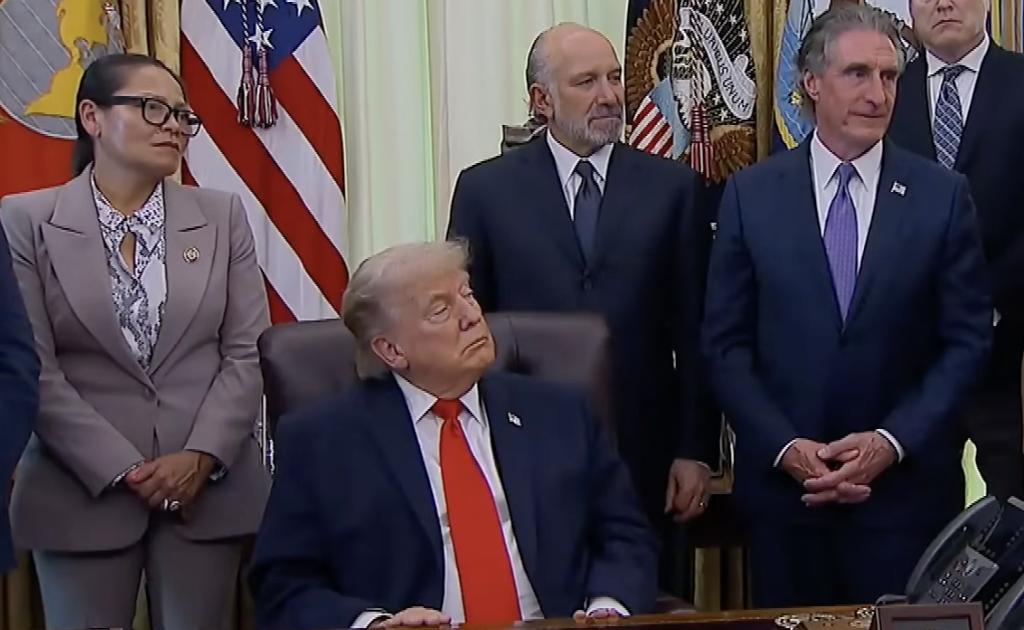
Gov. David M. Apatang, Bureau of Environmental and Coastal Quality Administrator Floyd Masga, and former Western Pacific Regional Fishery Management Council vice chair John Gourley have welcomed President Donald J. Trump's proclamation reopening parts of the Mariana Trench Marine National Monument to commercial fishing, while conservation advocates warn the move could weaken protections for culturally and environmentally significant waters.
Apatang welcomed the June 11 proclamation, saying it restores access to designated fishing grounds while maintaining federal fisheries management and environmental safeguards.
"For generations, the people of the Northern Mariana Islands have relied on the ocean for sustenance, culture, and economic opportunity," Apatang said. "This proclamation acknowledges the importance of America's Pacific territories and supports opportunities for responsible fisheries development while maintaining strong conservation standards."
The governor said the CNMI shares common interests with other Pacific jurisdictions in supporting local fisheries, improving food security, and pursuing economic opportunities tied to ocean resources. He also emphasized that existing protections for marine habitats, coral reefs, and protected species remain in place.
Masga said critics have raised concerns about whether economic benefits from expanded commercial fishing would remain in the CNMI, but noted the issue deserves a balanced discussion.
"Although proponents speak of jobs and food security, much of the commercial fishing industry is controlled by large companies based elsewhere," Masga said.
He noted concerns that fish could be landed and processed outside the CNMI, local employment gains could be limited, and profits could flow elsewhere unless investments are made in local infrastructure.
Gourley said the proclamation restores rights that many Pacific Islanders believe were taken away through previous monument designations.
"I am very happy to hear that President Trump has returned fishing rights to Pacific Islanders within some areas of the Western Pacific Marine National Monuments," Gourley said. "Fishing rights were unilaterally taken from us by presidents who thought their vision of marine conservation was more important than Pacific Island culture."
Gourley said the current approach balances conservation with the interests of island communities.
"Thanks to President Trump, sustainable commercial fishing rights are being restored in certain waters of the marine monuments," he said. "These marine resources will be managed and protected by the Magnuson-Stevens Act, while also recognizing the fishing rights of U.S. Pacific Island communities and U.S. citizens."
The Saipan Fishermen’s Association also support the proclamation, according to its president Tony Scragg.
“Overall, we are in agreement with this as long as we have input on how it is managed and any economic benefits from these activities flow through the CNMI. Brief review of comments from members of the SFA are all in support,” he said.
Opposition to the proclamation remains strong among conservation advocates.
The Friends of the Mariana Trench said the decision threatens protections established for waters that are culturally and environmentally significant to the Chamorro and Refaluwasch people.
"True conservation requires persistence. Since 2007, our advocacy for the Mariana Trench has been unyielding, and it will remain so," the group said in a statement.
"We stand in solidarity with Pacific communities whose cultural heritage is currently being eroded by the Trump administration—from the access granted to commercial vessels in sacred areas, to the leasing of our seabed for deep-sea mining and the threats of nuclear waste."
The group said waters set aside to honor traditional fishing practices were now being "sacrificed for industrial gain."
"While this is a significant setback, our fight for healthy oceans and the communities that depend on them is far from over."
Trump's proclamation removes monument-based prohibitions on commercial fishing in the Islands Unit of the Mariana Trench Marine National Monument while leaving existing federal fisheries and environmental laws in place. The administration says the action will expand economic opportunities while maintaining science-based conservation and resource management.
CNMI Delegate Kimberlyn King-Hinds, who attended the White House signing ceremony, said implementation of the proclamation should involve local fishermen, the CNMI government, scientists, environmental stakeholders, and the wider community.
"The CNMI respects the Mariana Trench Marine National Monument and the environmental importance of the waters around our islands," King-Hinds said. "At the same time, the people who live closest to these waters should have a meaningful voice in how they are managed."
Share this article: